The best laser welder for jewelry is not necessarily the machine with the highest wattage or the longest specification sheet.
For most professional jewelry repair shops, the best all-round choice is a 100W to 200W desktop Nd:YAG laser welder with adjustable pulse energy, pulse width, frequency, and spot size. It should also include a clear microscope, argon shielding, reliable cooling, and accessible technical support.
However, the right machine still depends on your work.
A solo bench jeweler repairing chains and retipping prongs does not need the same system as a manufacturer welding thick platinum rings throughout an eight-hour shift. Paying for unused production capacity increases the investment without improving everyday repair quality.
This guide compares the main jewelry laser welder categories, explains which specifications matter, and helps you match the machine to your metals, workload, and budget.
Best Jewelry Laser Welders at a Glance
Buyer Profile | Recommended Machine Type | Suitable Applications | Example Brands |
|---|---|---|---|
Solo bench jeweler | Compact 60W–100W desktop laser | Chains, prongs, porosity, light ring resizing | Orion, DADO, compact factory-direct systems |
Growing repair shop | 100W–200W water-cooled desktop laser | Daily gold, silver and platinum repairs | JewelryLaserNova, Bogong, Orotig |
Busy professional workshop | High-duty benchtop or pedestal Nd:YAG | Frequent repairs, thick shanks, repeated production | LaserStar, Sisma, Orotig |
Jewelry manufacturer | High-energy production system | Continuous operation, assembly and thick sections | Orotig Revo, Sisma LM series, LaserStar iWeld |
For most small and midsize jewelry businesses, a professional 100W–200W desktop system offers the best balance of control, productivity, and price.
Best for Solo Bench Jewelers: Compact Desktop Systems
Independent jewelers and small repair benches usually need accuracy more than maximum production speed.
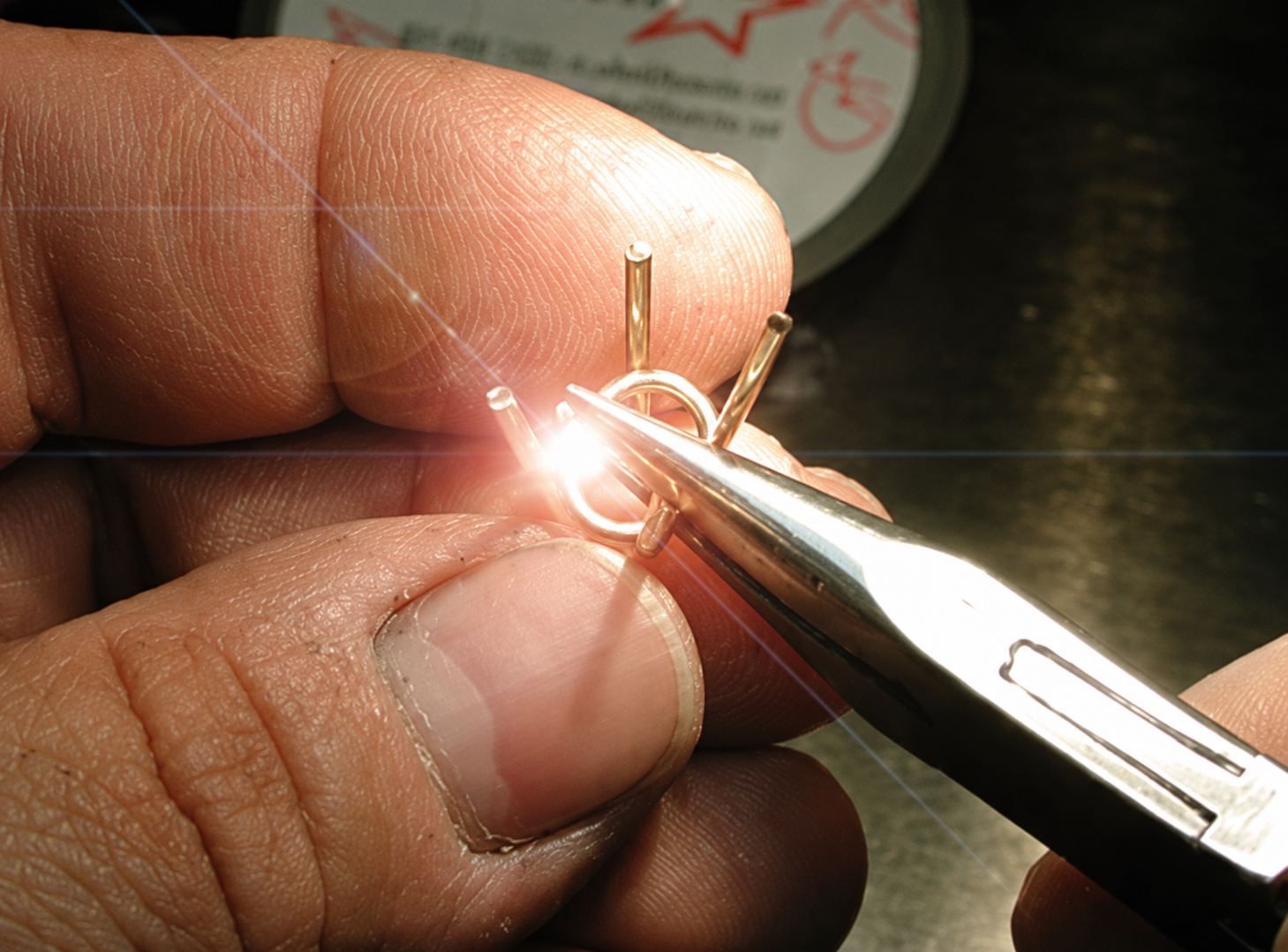
Typical work includes broken chains, jump rings, porosity filling, prong retipping, light ring resizing, and repairs close to heat-sensitive stones.
A compact 60W to 100W Nd:YAG or QCW laser can often handle these jobs when it provides enough control over pulse width, spot size, and energy.
Brands such as Orion and DADO focus on compact systems for small workshops. These machines typically combine a microscope, integrated cooling, and simplified controls in a relatively small footprint.
Why This Category Works
A lower-power professional jewelry laser welding machine can provide the fine control needed for small welds without taking up excessive bench space. It may also operate on standard single-phase power and require less cooling infrastructure than a production system.
Main Limitation
Compact machines may become slow when welding thick ring shanks, repairing platinum regularly, or completing many jobs throughout the day.
A low purchase price is only valuable if the machine can handle the thickest and most demanding work you normally accept.
Best Value for Growing Repair Shops: Factory-Direct Desktop Welders
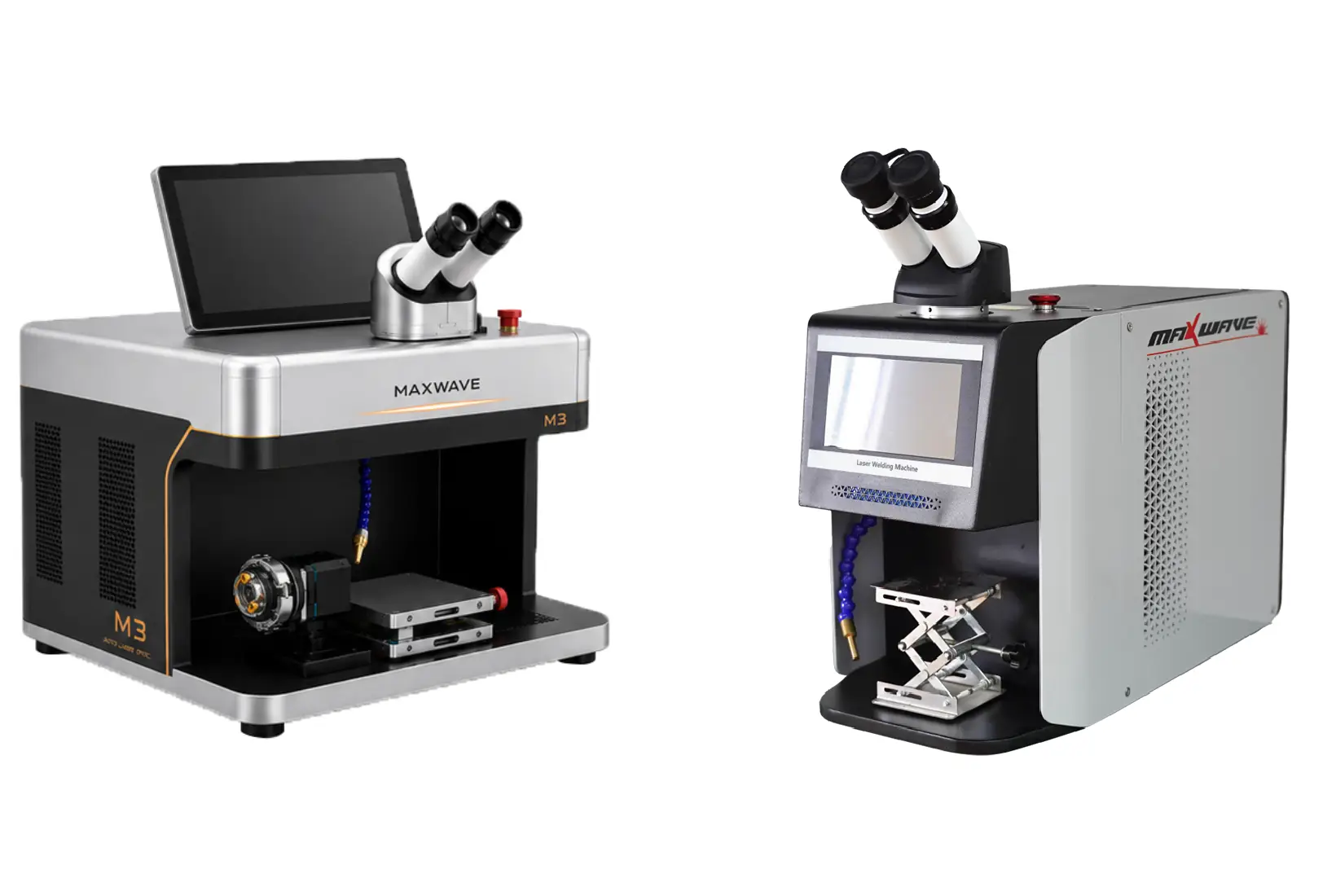
Growing jewelry workshops often need more capability than a compact entry system but cannot justify the price of a premium U.S. or European machine.
A factory-direct 100W to 200W desktop jewelry laser welder can provide a practical middle ground.
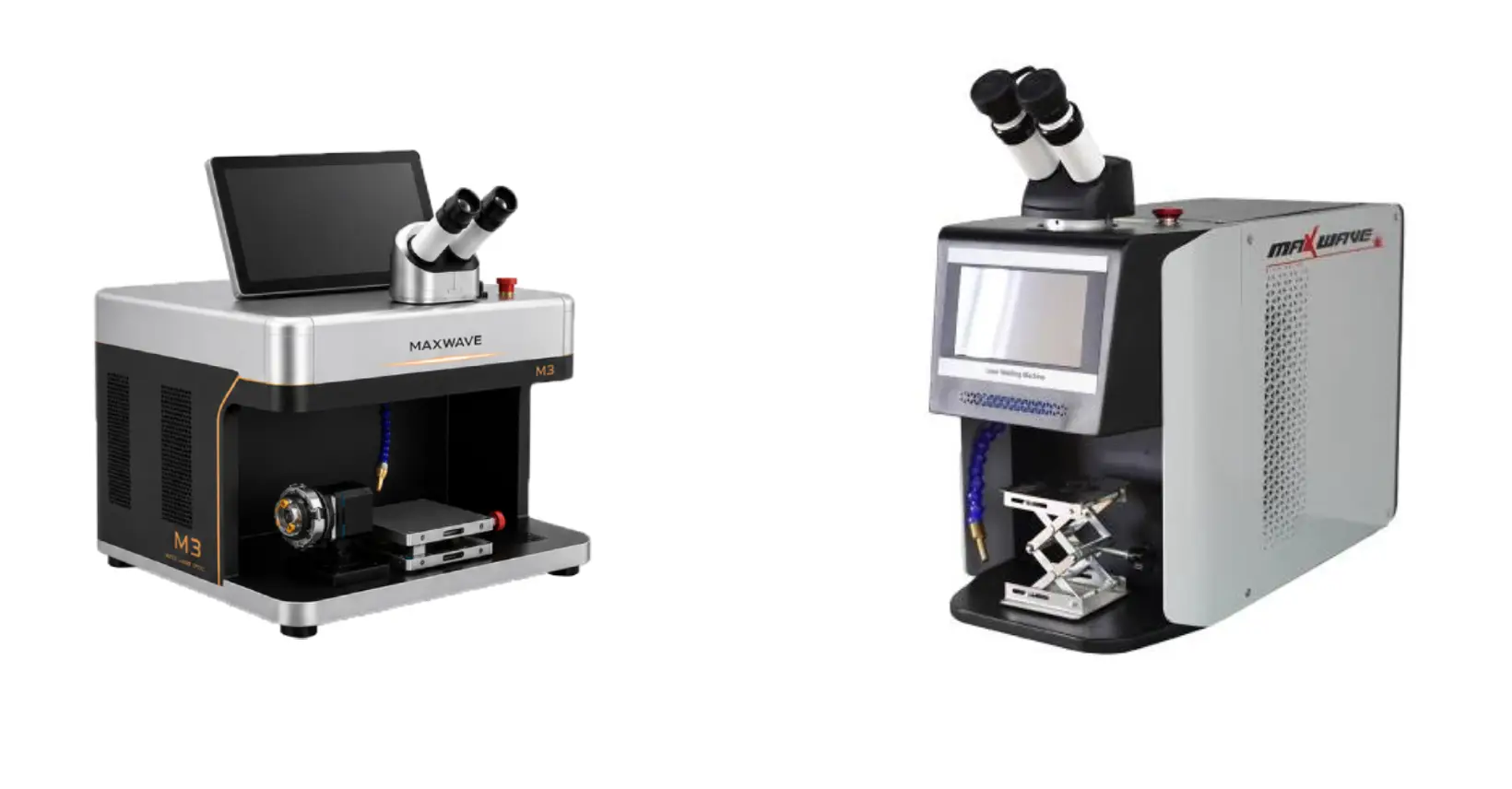
JewelryLaserNova offers compact jewelry welding systems designed for gold, silver, platinum, stainless steel, chain repair, ring resizing, prong rebuilding, porosity filling, and custom jewelry assembly.
Depending on the configuration, these systems may include a binocular microscope, CCD viewing screen, adjustable work platform, argon connection, foot pedal, and either air or water cooling.
Why This Category Works
The lower initial cost allows a repair shop to bring outsourced work in-house without immediately committing to a premium five-figure machine.
A 150W or 200W configuration can also provide more flexibility for thicker ring shanks, platinum work, and growing daily volume.
Main Limitation
Factory-direct equipment may rely primarily on remote training and technical support. Before purchasing, confirm the warranty, replacement-part prices, training format, shipping time, and whether important components are stocked locally.
Lower equipment cost should not come at the expense of usable documentation, spare parts, and technical assistance.
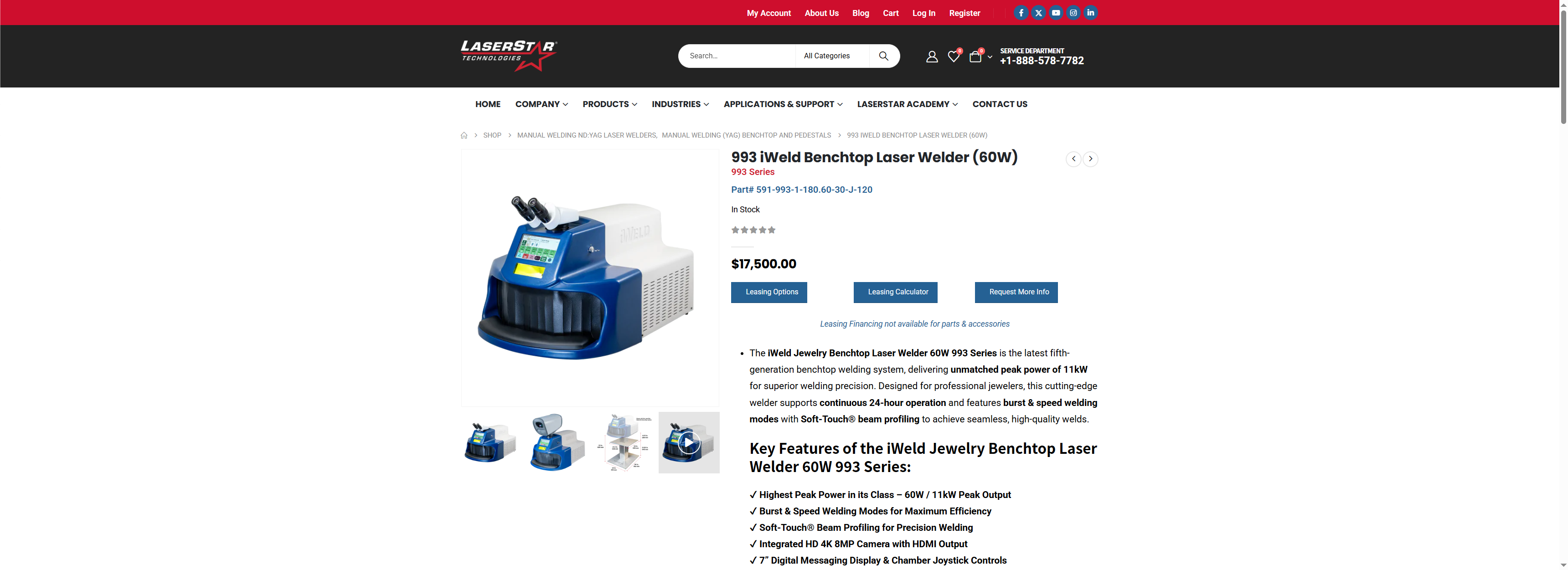
Best for Busy Repair Shops: LaserStar iWeld
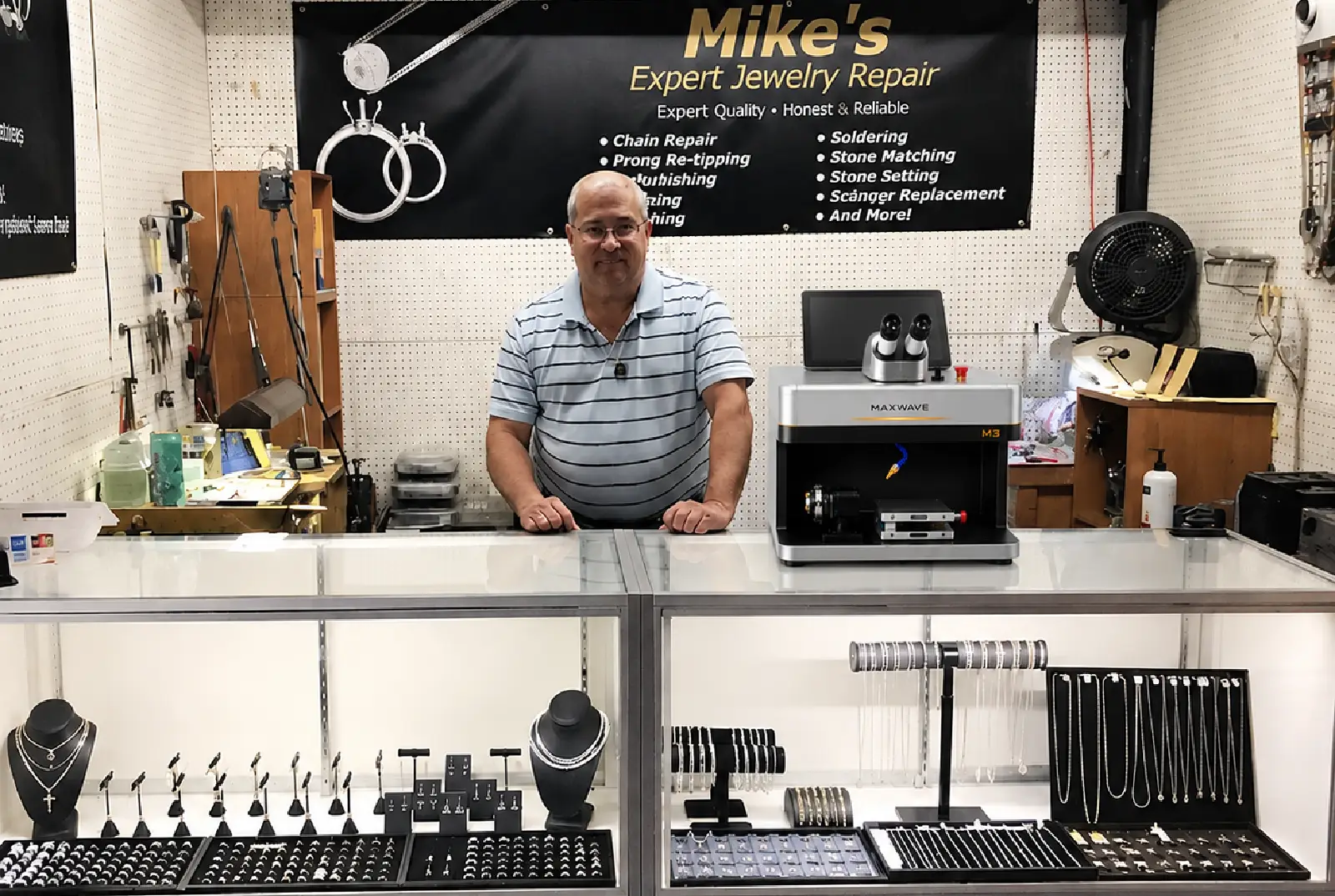
LaserStar’s iWeld systems are designed for jewelry businesses that use the laser throughout the working day.
They are available in benchtop and pedestal formats and combine high pulse energy, adjustable spot control, internal cooling, microscope viewing, and parameter memory.
This category is suitable for shops handling frequent ring resizing, thick shanks, platinum repairs, prong rebuilding, porosity correction, and repetitive production.
Why It Stands Out
The main advantage is workflow stability.
A busy shop needs a machine that can move between gold, silver, platinum, and different repair types without repeatedly rebuilding the parameter setup. Stored programs and a robust cooling system can reduce adjustment time between jobs.
U.S.-based manufacturing and service may also be valuable for North American buyers who cannot tolerate long replacement-part delays.
Main Limitation
The price is considerably higher than factory-direct desktop systems. The premium is easier to justify when the machine will be used regularly and downtime has a measurable financial cost.
Best for Continuous Professional Use: Sisma
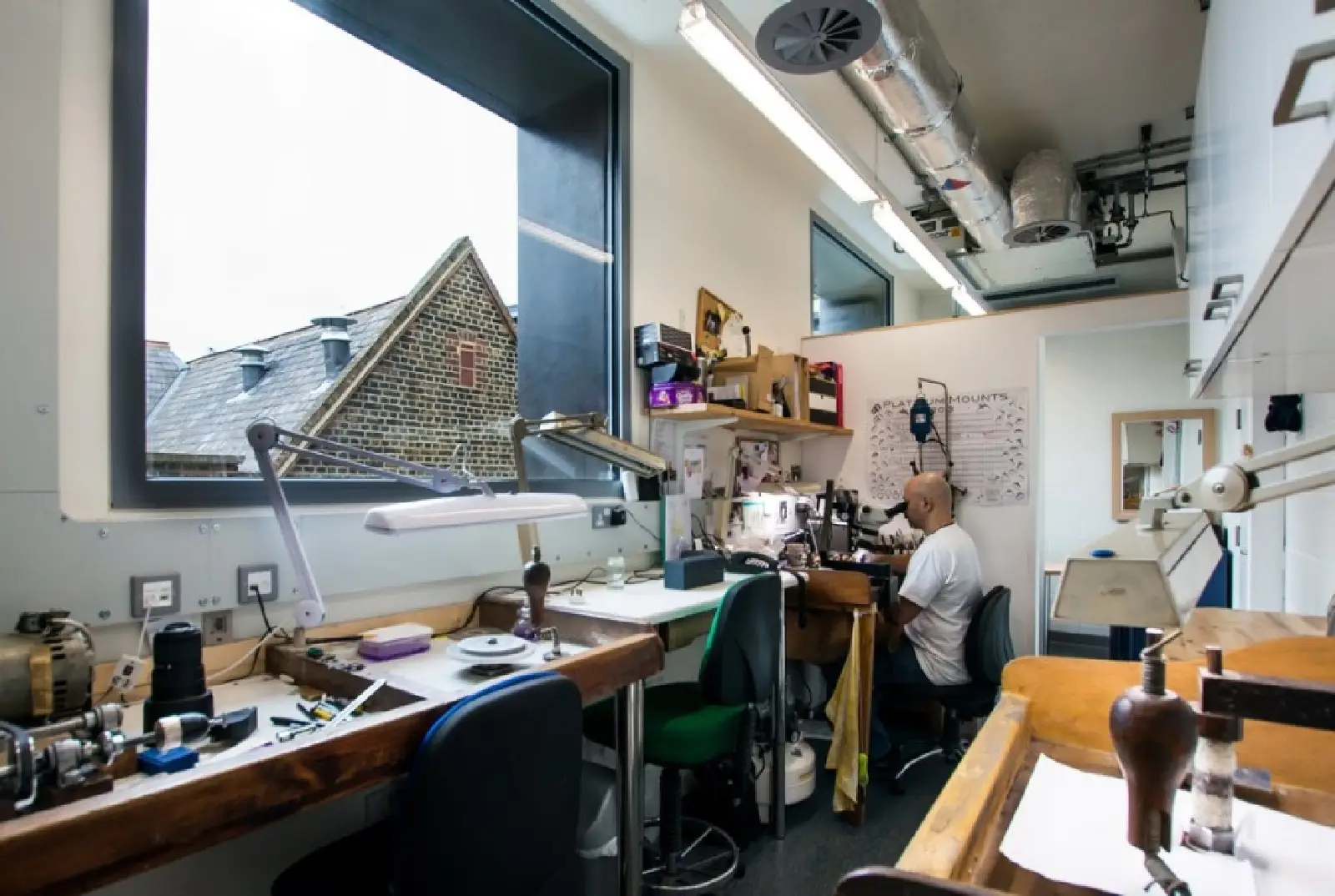
Sisma’s laser welders for jewelry are designed for professional workshops and manufacturing environments that require consistent operation and precise parameter control.
Its product range includes compact benchtop models and larger pedestal systems. These machines are generally positioned for daily repair, complex jewelry assembly, platinum work, and thicker sections requiring higher pulse energy.
Why It Stands Out
Sisma combines industrial construction with jewelry-specific controls, microscope viewing, integrated cooling, and an enclosed work chamber.
Higher-level models are better suited to businesses that need to maintain consistent results throughout long shifts.
Main Limitation
A premium industrial machine may be excessive for a shop completing only a few repairs each week.
Buyers should compare actual duty cycle and daily job volume rather than purchasing industrial capacity simply for future growth.

Best for Jewelry Manufacturing: Orotig
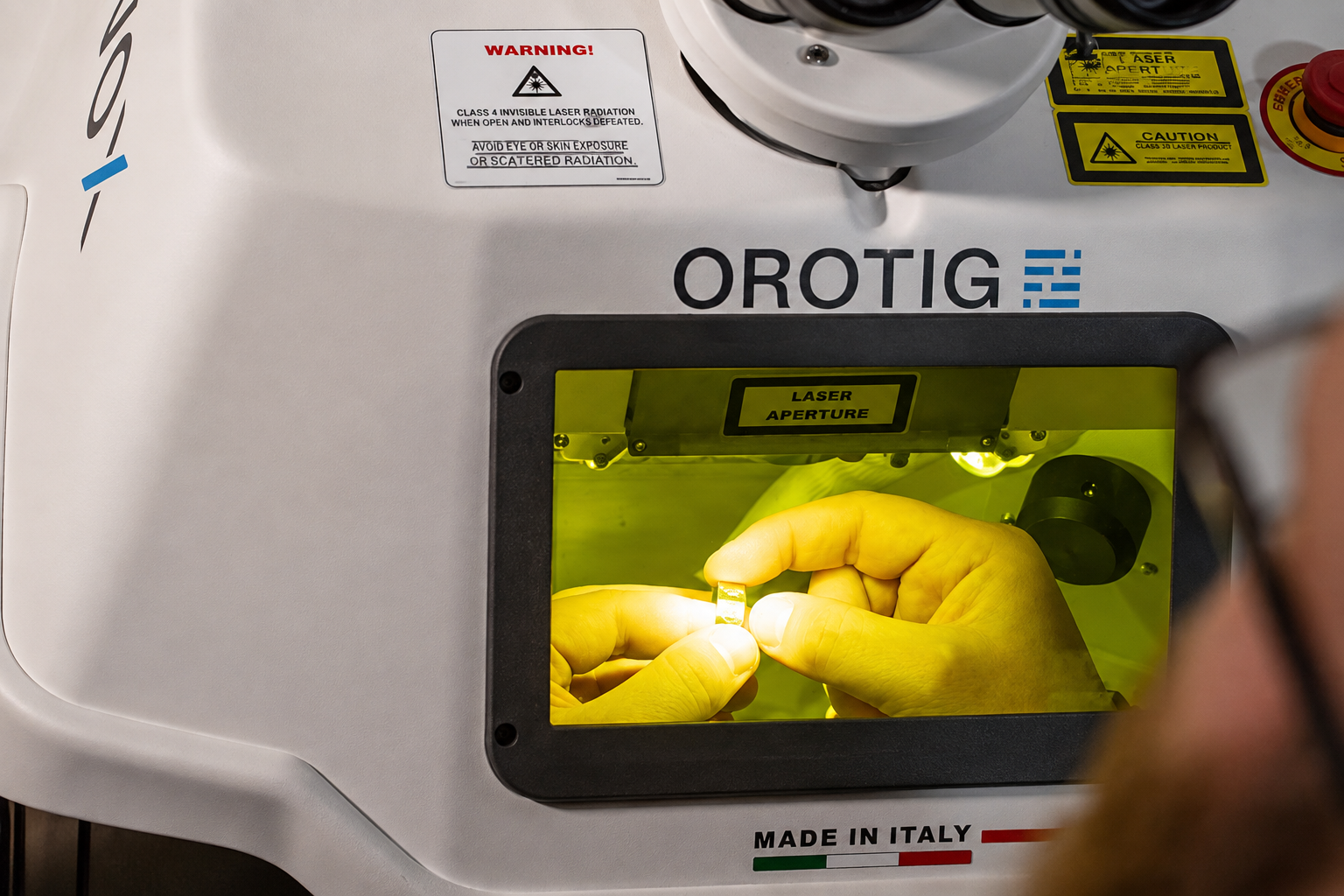
Orotig offers a broad range of jewelry welding machines, from compact desktop machines to high-output production systems.
Smaller systems are suited to professional repair and custom jewelry work, while more powerful models are designed for repeated manufacturing, thick sections, and long operating periods.
Why It Stands Out
The wide product range makes it possible to select a machine around a specific production level rather than forcing every buyer into the same configuration.
Orotig also has extensive experience in jewelry applications, which can be valuable when a manufacturer needs process guidance for several metals and assembly operations.
Main Limitation
Higher-output models represent a substantial investment. Confirm whether the additional pulse energy, cooling capacity, and production speed will actually be used.
What Specifications Matter Most?
Maximum wattage receives the most attention, but it is not the only specification that determines weld quality.
Pulse Energy
Pulse energy, usually measured in joules, affects how much energy reaches the joint during each pulse.
Higher pulse energy can help with deeper welds and thicker sections. However, too much energy may create excessive melting, porosity, distortion, or damage around the repair.
A laser jewelry welder should offer enough range to move from fine prong work to thicker ring joints without forcing the operator to use the maximum setting for normal repairs.
Pulse Width
In professional jewelry repair, pulse width controls how long each laser pulse acts on the metal.
Shorter pulses concentrate energy into a brief interval and are useful for small, controlled welds. Longer pulses transfer heat for more time and may help create deeper or wider welds.
A broad adjustable pulse-width range is more valuable than one impressive maximum-power number.
Spot Size
Spot size determines the diameter of the laser beam on the workpiece.
A small spot is useful for fine chains, prongs, filigree, porosity, and repairs near stones. A larger spot can help distribute energy across thicker ring shanks and assembly joints.
For professional jewelry work, the spot-size range should cover both precision repair and general welding.
Pulse Frequency
Frequency controls how many laser pulses can be delivered per second.
Low frequency gives the operator more control over individual welds. Higher frequency can increase speed during repetitive seam welding and production work.
The maximum frequency matters less than whether the machine remains stable at the settings you will use daily.
Microscope and Viewing System
The microscope is not a minor accessory. It directly affects positioning accuracy, operator comfort, and the ability to work safely near stones.
A clear binocular microscope is usually preferable for precise hand positioning. A CCD screen can help with training, demonstrations, documentation, and jobs where more than one person needs to view the work.
Some operators prefer using both.
Argon Shielding
Argon reduces oxidation around the weld and can improve color consistency and joint cleanliness.
It is particularly useful for platinum, titanium, stainless steel, and visible repairs where oxidation would require additional finishing.
Confirm that the machine has a controllable argon nozzle positioned close to the welding area.
Cooling and Duty Cycle
Cooling becomes more important as the number of daily jobs increases.
Air-cooled systems may be sufficient for occasional work and compact QCW units. Water-cooled jewelry laser welders are generally better suited to longer sessions, frequent welding, and higher-energy applications.
Do not accept vague claims such as “continuous operation.” Ask how long the machine can run at your intended settings before cooling or maintenance is required.

How Much Power Does a Jewelry Laser Welder Need?
Wattage should be matched to the type and volume of work, not selected only by metal.
Typical Work | Practical Starting Range |
|---|---|
Fine chains, jump rings, porosity and light prong work | 60W–100W |
Daily gold and silver repair, ring resizing and prong rebuilding | 100W–150W |
Frequent platinum, titanium and thicker ring sections | 150W–200W |
High-volume manufacturing and deep repetitive welds | 200W+ or a high-energy production system |
These ranges are only starting points.
A 60W machine with strong pulse energy and good beam control may outperform a poorly configured higher-wattage machine on fine repairs. Conversely, a shop regularly working on thick platinum bands may need more pulse energy and cooling than the average wattage suggests.
Average wattage does not describe the complete welding capability. Pulse energy, peak power, spot size, pulse width, and cooling must be evaluated together.
Can One Machine Weld Gold, Silver and Platinum?
Most professional Nd:YAG jewelry laser welders can work with gold, silver, platinum, palladium, titanium, and selected steel alloys.
However, each metal behaves differently.
Gold is generally responsive to laser welding and is common in repair work. Silver reflects more laser energy and conducts heat quickly, so it may require careful parameter adjustment. Platinum often benefits from strong pulse control and argon shielding, particularly on thicker joints.
Titanium also requires proper shielding to control oxidation.
The correct settings depend on alloy composition, joint fit, thickness, filler wire, surface condition, and desired penetration—not only the name of the metal.
Before purchasing, provide the supplier with examples of the jewelry you repair most often and request test welds on the same alloys.
What Does a Jewelry Laser Welder Cost?
Jewelry laser welder prices vary widely according to power, cooling, viewing system, build quality, training, and service support.
Price Range | What to Expect | Best For |
|---|---|---|
$3,000–$6,000 | Compact factory-direct system, basic microscope or CCD, lighter duty cycle | New workshops and occasional repair |
$6,000–$15,000 | Professional desktop system, stronger cooling, better parameter control | Active repair shops and custom jewelers |
$15,000–$30,000+ | Premium construction, production duty cycle, local training and service | High-volume repair and manufacturing |
A lower-cost machine may offer similar headline specifications to a premium model, but the complete package can be different.
The higher price may include better optics, more stable pulse output, improved ergonomics, stored programs, local installation, faster parts delivery, and structured training.
The best value is not automatically the lowest quotation. It is the machine that provides the required capability without creating unacceptable downtime or support risk.
What Other Costs Should You Budget For?
The machine price is only one part of the investment.
Additional costs may include shipping, customs duties, electrical preparation, argon cylinder and regulator, filler wire, protective windows, filters, cooling water, maintenance tools, training, and spare parts.
Argon consumption depends on the flow rate and how often the machine is used. Protective windows and optical covers should also be treated as routine consumables because they protect more expensive internal optics from smoke and metal spatter.
Before ordering, request current prices for the printhead or laser source, microscope components, protective lens, cooling system, control board, foot pedal, and other critical parts.
Also confirm which items are excluded from the warranty.
What Should You Test Before Buying?
A live test on your jewelry is more valuable than a polished demonstration on a supplier’s standard sample.
Send or bring several representative pieces:
A fine gold chain;
A ring requiring resizing;
A damaged prong;
A porous casting;
A thicker platinum or silver section;
A repair close to a stone.
Ask the supplier to demonstrate both easy and difficult settings.
Evaluate weld penetration, surface distortion, oxidation, color, porosity, finishing time, microscope clarity, chamber access, parameter adjustment, and operator comfort.
The test should also show how the machine performs at low energy. A machine that produces strong welds only near maximum power may lack the control required for delicate repairs.
The best jewelry laser welder is the one that succeeds on your most common and most difficult jobs—not the one that produces the best sample on the supplier’s metal plate.
Jewelry Laser Welder Buying Checklist
Before making a final decision, confirm the machine’s usable pulse-energy range, pulse-width adjustment, spot-size range, frequency control, microscope quality, argon system, cooling capacity, electrical requirements, chamber access, parameter memory, warranty, training, and spare-parts availability.
Also ask who will provide technical support, how quickly they normally respond, and where replacement components are shipped from.
A slightly more expensive machine with dependable support may cost less over several years than a cheaper system that remains idle while parts are in transit.
Conclusion
There is no single jewelry laser welder that is best for every buyer.
For a solo bench jeweler completing light repairs, a compact 60W to 100W machine may provide all the control required.
For most active repair shops and custom jewelry workshops, a 100W to 200W desktop Nd:YAG system with a binocular microscope, adjustable pulse parameters, argon shielding, and reliable cooling offers the strongest overall balance.
For continuous production, thick platinum work, and high daily volume, premium systems from LaserStar, Sisma, or Orotig may justify their higher price through greater duty cycle, workflow stability, and service support.
For growing businesses that want professional capability at a lower initial cost, a factory-direct JewelryLaserNova system may provide a more accessible route into in-house laser repair.
Not sure which configuration fits your bench? Send JewelryLaserNova photos or samples of your typical repairs, along with the metals you work with, daily job volume, and the most difficult welds you need to complete. Our engineering team can perform sample welding, recommend the appropriate power and pulse configuration, and provide an itemized delivered quotation with training, warranty, and spare-parts details.