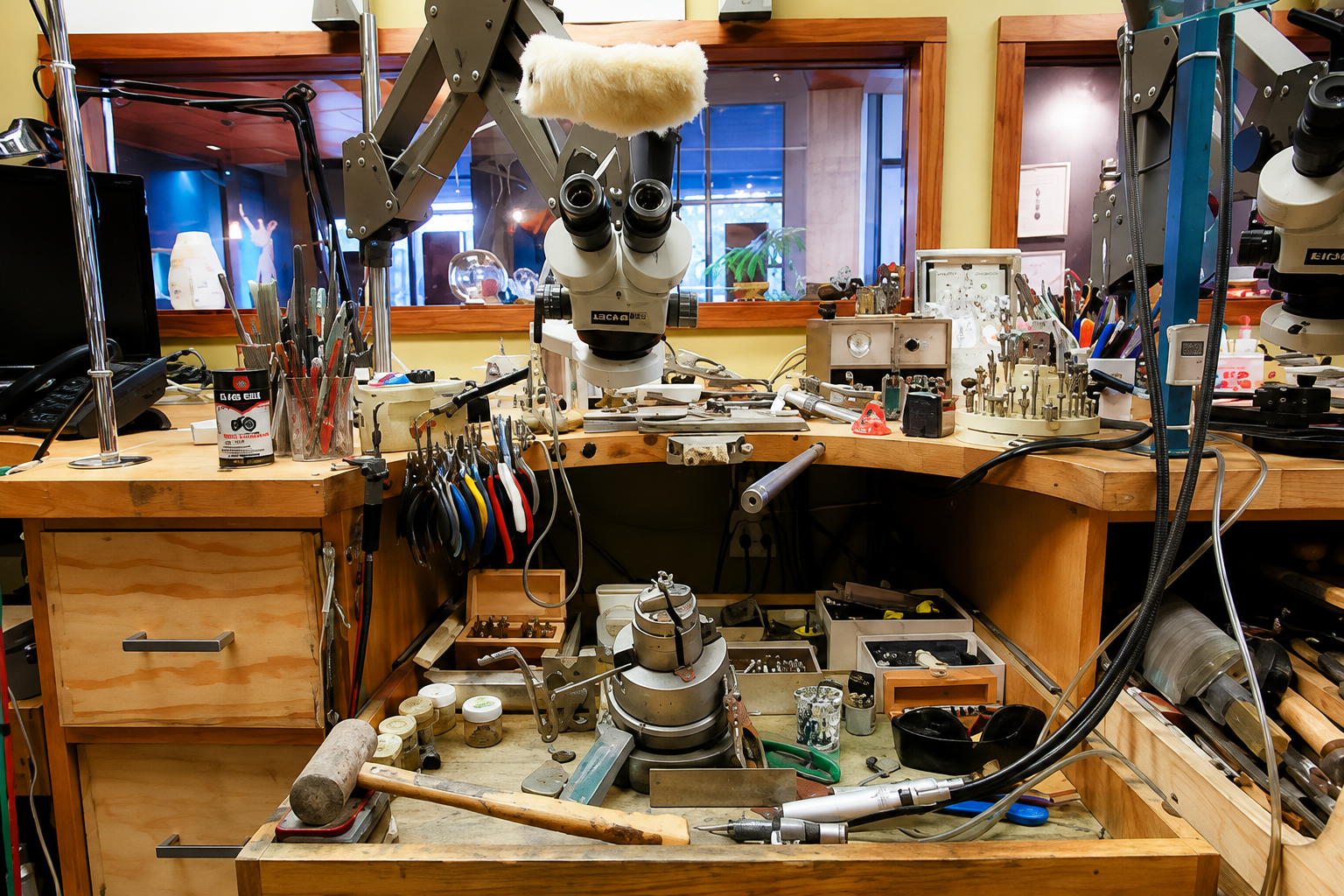
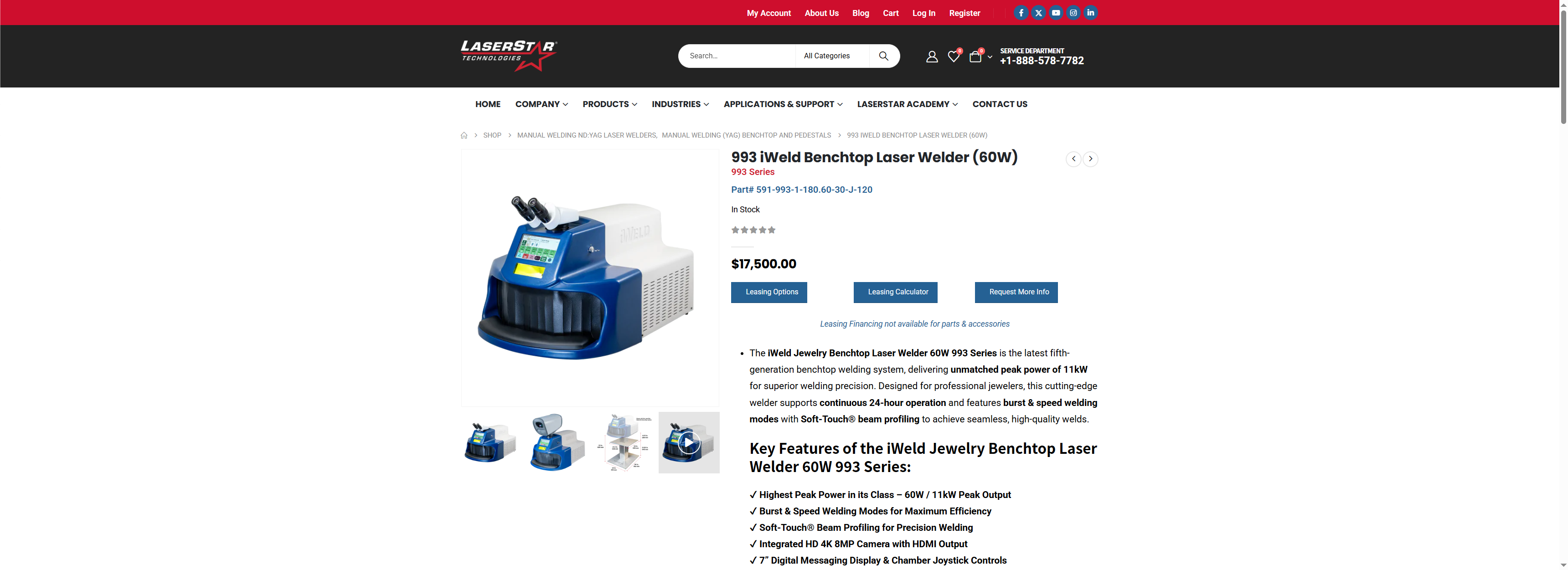
A jewelry laser welder can help a repair shop complete ring sizing, chain repair, prong retipping, porosity filling, and stone-set jewelry work with less heat than traditional torch soldering.
However, the most expensive machine is not automatically the best one for your bench.
A high wattage number means little if the machine cannot deliver stable pulse energy, maintain a consistent focal point, or support the metals and repair jobs you handle every day. Poor optics, weak cooling, limited training, or slow spare-parts delivery can turn an apparently affordable machine into an expensive source of downtime.
The right jewelry laser welder should match your metals, repair volume, operator skill level, and expected return—not simply have the largest numbers on its specification sheet.
Before paying a deposit, check the following 12 factors.
1. Start With the Jewelry Repairs You Actually Perform
The first question is not “How many watts does the machine have?”
It is:
What work do you need it to complete consistently?
A shop focusing mainly on fine gold chains and light prong repairs has different requirements from a workshop resizing platinum rings or filling deep casting porosity.
List your most common jobs before comparing machines. These may include ring sizing, chain repair, prong rebuilding, bezel repair, porosity filling, permanent jewelry, eyeglass repair, or small precision components.
Also consider the metals you handle. Gold is generally easier to weld than highly reflective silver, while platinum often requires stronger and more stable energy delivery.
Do not rely only on a supplier’s standard sample. Send your own pieces or closely matched samples and ask the supplier to demonstrate the exact repairs you plan to sell.
A successful sample weld on your metal and joint type is more useful than a showroom demonstration on an easy test plate.
2. Check Usable Pulse Energy, Not Just Wattage
Average power is one of the most heavily promoted jewelry welder specifications, but it does not explain how much energy reaches the workpiece in each pulse.
For pulsed jewelry welding, pulse energy in joules is often more useful than wattage alone.
A machine may advertise 100W, 150W, or 200W, but its real welding capability also depends on pulse duration, repetition rate, spot size, and the stability of the power supply.
As a general guide, light gold repairs may require relatively low pulse energy, while silver, platinum, thicker shanks, and deeper joints usually require more. Exact settings will depend on the alloy, thickness, filler wire, joint gap, and focal spot.
Ask the supplier to provide:
Maximum pulse energy in joules;
The pulse width and frequency used to achieve it;
The stable working range rather than only the theoretical maximum;
Sample welds at your normal production settings.
Be cautious when a supplier promotes only “peak power” in kilowatts. Peak power may sound impressive, but it does not tell you whether the machine can produce a strong, repeatable joint on your jewelry.
The important question is whether the machine delivers stable, usable energy across your normal repair range.
3. Evaluate Pulse Width, Frequency, and Spot-Size Control
Jewelry welding requires more than raw energy. It also requires precise control over how that energy is delivered.
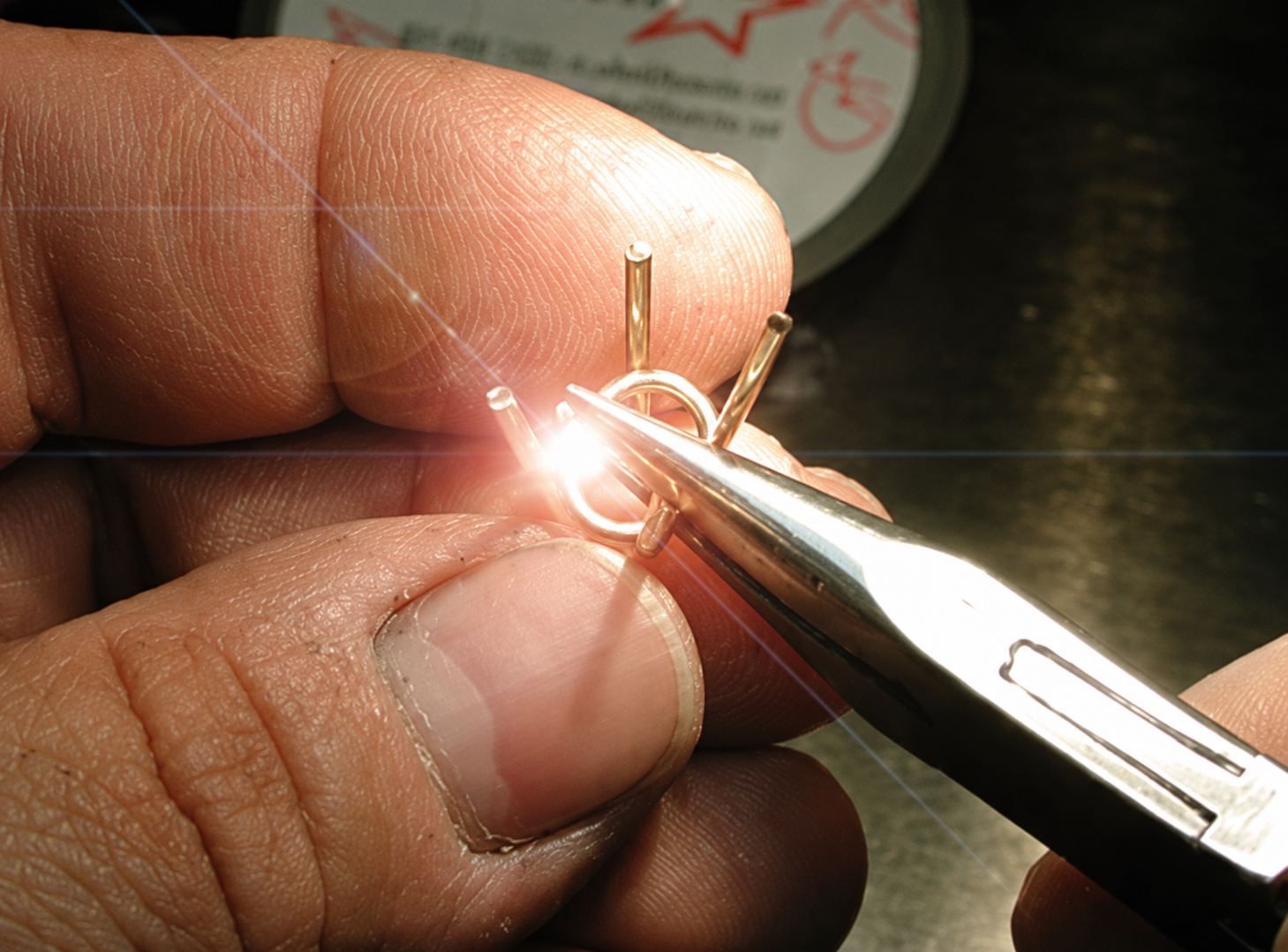
Pulse width controls how long each laser pulse interacts with the metal. Shorter pulses help limit heat around delicate prongs and thin bezels. Longer pulses can provide deeper fusion for thicker sections and porosity repair.
Frequency affects how quickly pulses repeat, while spot size changes the concentration of energy on the workpiece.
A professional jewelry laser welder should provide a sufficiently broad adjustment range, such as approximately:
Pulse width from around 0.2 to 15 ms;
Spot diameter from approximately 0.1 to 2.0 mm;
Adjustable pulse frequency for both slow precision work and faster production.
The exact range is less important than how accurately and consistently it can be adjusted.
Digital controls are generally easier to repeat than coarse analog knobs. If several operators use the machine, repeatable settings become even more important.
Ask the supplier to show the difference between a fine prong repair, a ring-shank weld, and a deeper porosity fill. The machine should be able to move between these tasks without unpredictable changes in penetration or heat.
4. Test Spot Consistency and Working Distance
A small advertised spot size does not guarantee precise welding.
The laser spot must remain stable, correctly focused, and aligned with the microscope target. If the focal position drifts, the same parameter setting may produce a deep weld on one piece and only surface melting on the next.
Working distance also affects usability. The operator needs enough space for fingers, tweezers, filler wire, clamps, and awkward jewelry shapes.
A machine may perform well on a flat test coupon but become difficult to use when welding inside a narrow ring or around a complex setting.
Before buying, ask the supplier to demonstrate:
Spot alignment at low and high energy;
Focus repeatability after changing the workpiece;
Welding inside a small ring shank;
Access around prongs, bezels, and recessed areas;
The available working distance beneath the microscope.
Precision is not only about how small the spot can become. It is about whether that spot lands in the same place, pulse after pulse.
5. Inspect the Microscope and Viewing System
The microscope is not a minor accessory. It directly affects weld placement, operator fatigue, and repair quality.
For most jewelry work, 10× magnification is a practical minimum, while higher magnification can be useful for micro-pavé, fine prongs, and very small components.
Optical clarity matters more than a large magnification claim. Cheap lenses may produce edge distortion, poor contrast, or color fringing that makes it difficult to distinguish the weld pool from the surrounding metal.
The microscope should also provide enough working distance for tools and comfortable binocular adjustment for different operators.
Evaluate the viewing angle and operator posture. A machine that forces the jeweler to bend forward for long periods can increase fatigue and reduce precision during a full working day.
A CCD camera or monitor can be useful for training, documentation, customer demonstrations, and reducing eye strain, but it should not replace clear direct optics for precision work.
During the demonstration, inspect a small prong, fine chain link, or narrow stone seat—not only a wide ring shank.
6. Check the Argon Shielding System
Argon shielding helps protect the molten weld pool from oxygen and reduces oxidation, discoloration, and porosity.
This is particularly important when working with platinum, silver, high-karat gold, and repairs where surface appearance matters. When evaluating a laser welder for jewelry, check how effectively the shielding system protects the actual weld area—not simply whether argon shielding is listed in the specifications.
A basic machine may include only a simple gas tube and regulator. A better system provides stable flow and positions the gas close to the weld without blocking the operator’s view.
Ask the supplier to demonstrate the gas nozzle adjustment and show the difference between welding with and without shielding.
The system should provide:
Stable and adjustable argon flow;
A nozzle that can be positioned close to the weld;
Clear access for filler wire and tools;
Optional pre-flow or post-flow control where available.
High flow is not always better. Excessive gas flow can become turbulent and pull surrounding air into the weld area.
The quality and purity of the argon supply also matter. The machine cannot produce clean shielding if the gas, hose, or regulator introduces contamination.
“Argon shielding included” is not enough. Confirm that the system delivers stable coverage where the weld actually occurs.
7. Confirm the Cooling System and Continuous Duty Capability
A jewelry laser welder may perform well during a short demonstration but lose stability after extended use.
The cooling system controls the temperature of the laser source, power electronics, and optical components. If cooling is inadequate, the machine may reduce output, become inconsistent, or force the operator to pause between jobs.
Air-cooled machines are usually smaller and simpler, making them suitable for lighter workloads and compact studios.
Water-cooled systems are generally better suited to busy repair benches, longer working sessions, and higher-energy welding. However, they require more space and additional maintenance of the chiller and coolant.
Ask how long the machine can operate at your typical settings without interruption.
A useful demonstration is a 60- to 90-minute working test using realistic pulse energy and frequency. Watch whether the weld quality, output stability, or cooling temperature changes during the test.
Do not judge duty cycle from a short sequence of low-energy pulses.
If your shop handles repairs throughout the day, choose a machine designed for continuous operation rather than one that requires regular cooling pauses.
8. Choose the Right Laser Source Architecture
Jewelry laser welders commonly use pulsed Nd:YAG, QCW fiber, or other fiber-based laser architectures.
Each system has advantages.
Traditional Nd:YAG jewelry welders remain popular because they provide controllable pulsed energy and a forgiving welding response for fine repair work. They are widely used for gold, silver, platinum, and detailed bench repairs.
Their disadvantages can include a larger machine footprint, water-cooling requirements, flash-lamp replacement on some designs, and higher ongoing maintenance.
Fiber and QCW systems generally offer higher electrical efficiency, longer source life, smaller size, and lower routine maintenance. They can be attractive for production environments, mixed precision applications, and businesses that value uptime.
However, the tighter and more concentrated beam may require greater parameter control and operator skill on very delicate components.
Do not assume that one architecture is automatically superior.
A repair shop focused on fine prongs and cosmetic restoration may value the welding behavior of a traditional YAG system, while a higher-volume workshop may prefer the efficiency and source life of a fiber or QCW machine.
Compare the machines using your own parts rather than choosing solely by source type.
9. Review the Control Interface and Parameter Memory
The operator should be able to adjust and recall settings quickly without navigating a complicated menu.
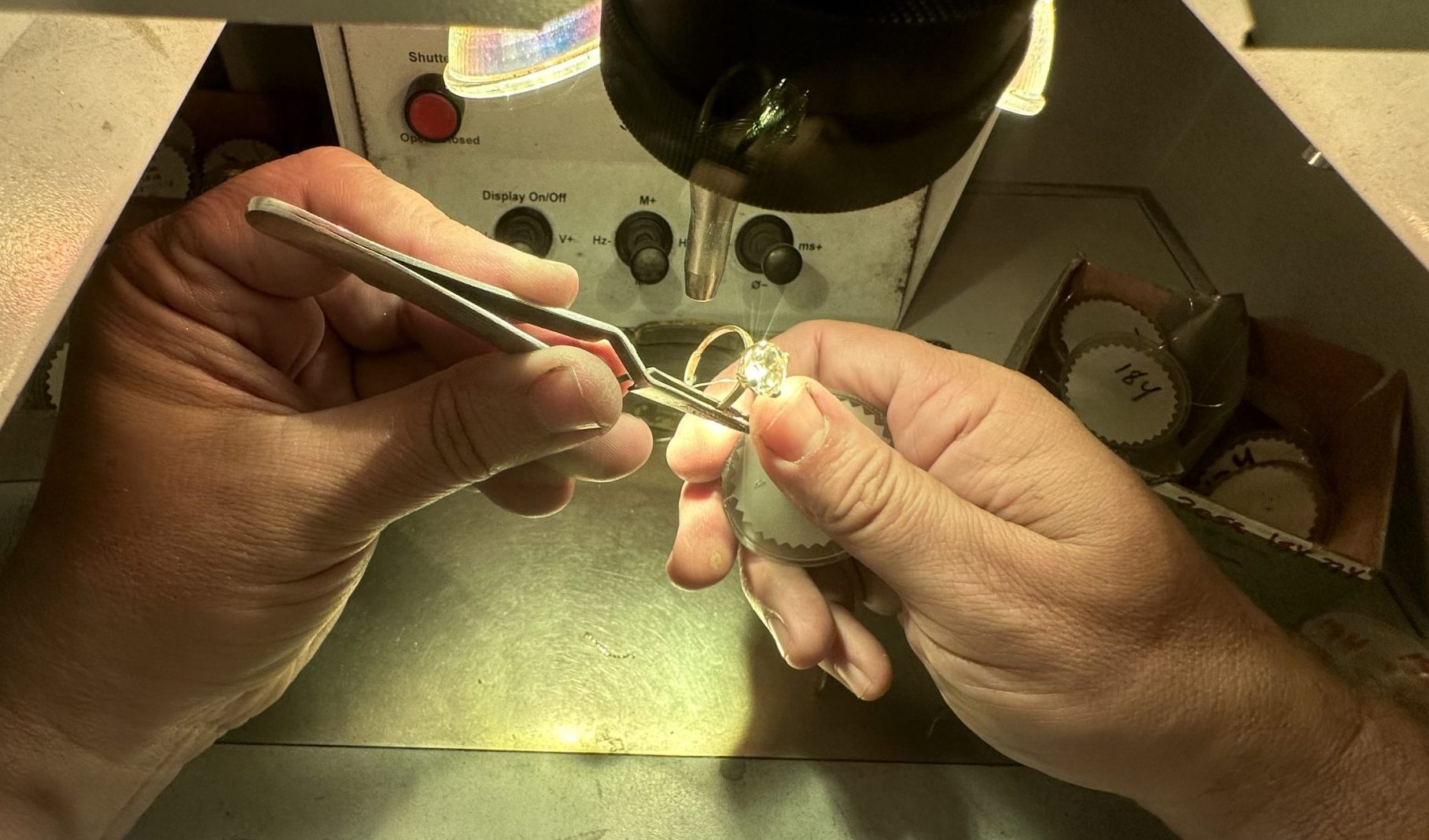
A useful control system should display pulse energy, pulse width, frequency, and spot-size settings clearly. It should also allow the operator to save parameter profiles for common repairs.
A small repair shop may need presets for gold ring sizing, silver chains, platinum prongs, porosity filling, and permanent jewelry. A multi-operator workshop may need dozens of profiles organized by alloy, joint type, and technician.
Check whether saved profiles store the complete parameter set rather than only one or two values.
Also confirm how quickly the machine moves between profiles and whether settings remain saved after a shutdown or software update.
Useful features may include:
User-programmable parameter memory;
Foot-pedal control;
Clear fault messages;
Multiple language options;
Operator access levels;
Exportable repair or fault records.
The interface does not need to look sophisticated. It needs to remain reliable and easy to understand when an operator is working under pressure.
10. Verify Safety Features and Compliance
A jewelry welding machine is a high-powered laser system and should be treated as professional industrial equipment.
Check whether the machine includes appropriate enclosure design, observation-window protection, safety interlocks, emergency stop controls, grounding, and shielding around the working chamber.
Protective eyewear must match the machine’s wavelength and provide a clearly stated optical density rating. Generic glasses without wavelength and certification information should not be accepted as adequate protection.
Also confirm whether the machine complies with the electrical and laser-safety requirements of your market. Depending on the country, buyers may need CE, FDA, FCC, EMC, or other documentation.
The model number and manufacturer listed on the certificates should match the machine and invoice.
If the process produces metal fumes or vapor, the workstation may also need suitable extraction and filtration.
Safety accessories are part of the machine purchase—not optional extras to add after installation.
11. Check Electrical Requirements, Footprint, and Serviceability
Before ordering, confirm that the machine fits both your electrical supply and your physical workspace.
Jewelry laser welders may require 110V, 220V, or another specified input, depending on the configuration. Check the total power demand of the laser, cooling unit, extraction system, and accessories.
A plug adapter does not correct an incompatible voltage or frequency.
The machine may also require a dedicated electrical circuit, proper grounding, voltage stabilization, or a step-up or step-down transformer.
Measure the installation area carefully. Allow room for the machine, cooling system, argon cylinder, extraction unit, operator chair, tools, and maintenance access.
Weight is also important. Larger desktop systems may require a reinforced bench or fixed installation.
Ask whether routine components such as lamps, filters, pumps, dampers, optics, and print—or laser-source modules—can be replaced locally. A machine that must be returned to the factory for every repair can create long periods of downtime.
12. Compare Training, Warranty, Support, and Total Cost
The purchase price is only the beginning of the investment.
Your first-year cost may also include shipping, import duties, electrical preparation, argon equipment, extraction, cooling, training, spare parts, maintenance, and consumables.
Ask for an itemized quotation showing exactly what is included.
Training should cover more than starting the machine. A credible program should include parameter selection, focus adjustment, argon use, filler-wire technique, daily maintenance, fault diagnosis, and sample repairs on the metals you use.
Warranty terms should identify coverage by component. The laser source, power supply, cooling system, control board, microscope, and accessories may have different warranty periods.
Also confirm who pays freight, how replacement parts are shipped, and whether remote diagnostics are available.
A useful acceptance test should include several of your typical repairs and at least one extended working session. Final payment should depend on the machine meeting the agreed sample and performance requirements.
A low-cost machine with weak training and slow support can cost more than a better-supported system once rework and downtime are included.
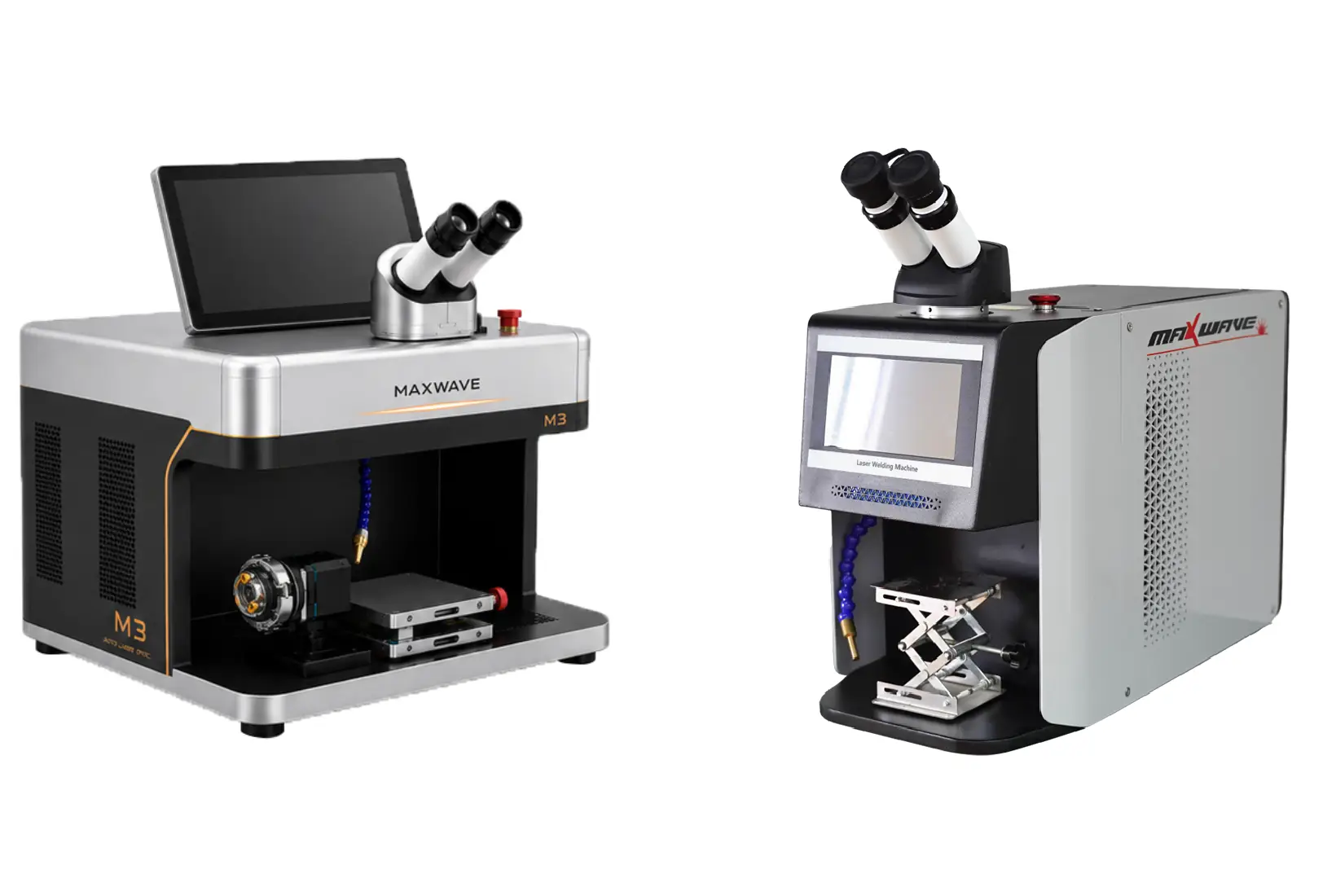
How Much Should You Spend on a Jewelry Laser Welder?
The right budget depends on repair volume and the metals you handle.
Budget Range | Typical Capability | Best Fit |
|---|---|---|
$3,000–$6,000 | Entry-level power and controls | Occasional gold repairs, small studios, market testing |
$6,000–$15,000 | Better pulse control, optics, cooling, and support | Active jewelry stores and full-time repair benches |
$15,000+ | Higher automation, production capacity, and service options | Multi-operator workshops, repair centers, production environments |
Entry-level jewlery welding machines can be suitable for a jeweler bringing occasional outsourced repairs in-house. However, support quality, documentation, and spare-parts availability can vary significantly in this price range.
The professional mid-range is usually the most practical choice for an active repair business. It offers enough control and capacity for regular gold, silver, and platinum work without requiring the investment of a production system.
Premium equipment makes sense when downtime is expensive, several technicians share the machine, or high daily repair volume justifies greater automation and support.
Do not calculate return on investment from machine speed alone.
Consider the number of outsourced jobs you can bring in-house, the additional repairs you can accept, the reduction in rework, and the improvement in turnaround time.
Before You Place an Order
Do not purchase a jewelry laser welder based only on a brochure or a polished demonstration.
Send the supplier examples of your most common repairs and ask for unedited videos showing the full welding process, parameter settings, filler wire, finished surface, and strength test where appropriate.
Confirm the final configuration, accessories, training, warranty, spare-parts prices, shipping terms, and installation requirements in writing.
A supplier that understands jewelry repair should be able to explain why a specific configuration fits your work—not simply recommend the highest-powered machine.
Conclusion
Buying a jewelry welder is a shop-floor decision, not a specification contest.
The right machine should provide enough pulse energy for your metals, precise control for delicate repairs, clear optics, stable shielding, reliable cooling, and an operating workflow your team can repeat every day.
Just as importantly, it should come with training, spare parts, and technical support that keep the machine earning revenue after installation.
Before you buy, test the welder on your own gold, silver, and platinum samples. Verify the results, the workflow, and the complete cost—not just the advertised wattage.
Need help selecting a configuration? Send us photos or samples of your typical repairs, the metals you work with, and your expected daily workload. We can recommend a suitable jewelry laser welder and provide application testing before you invest.