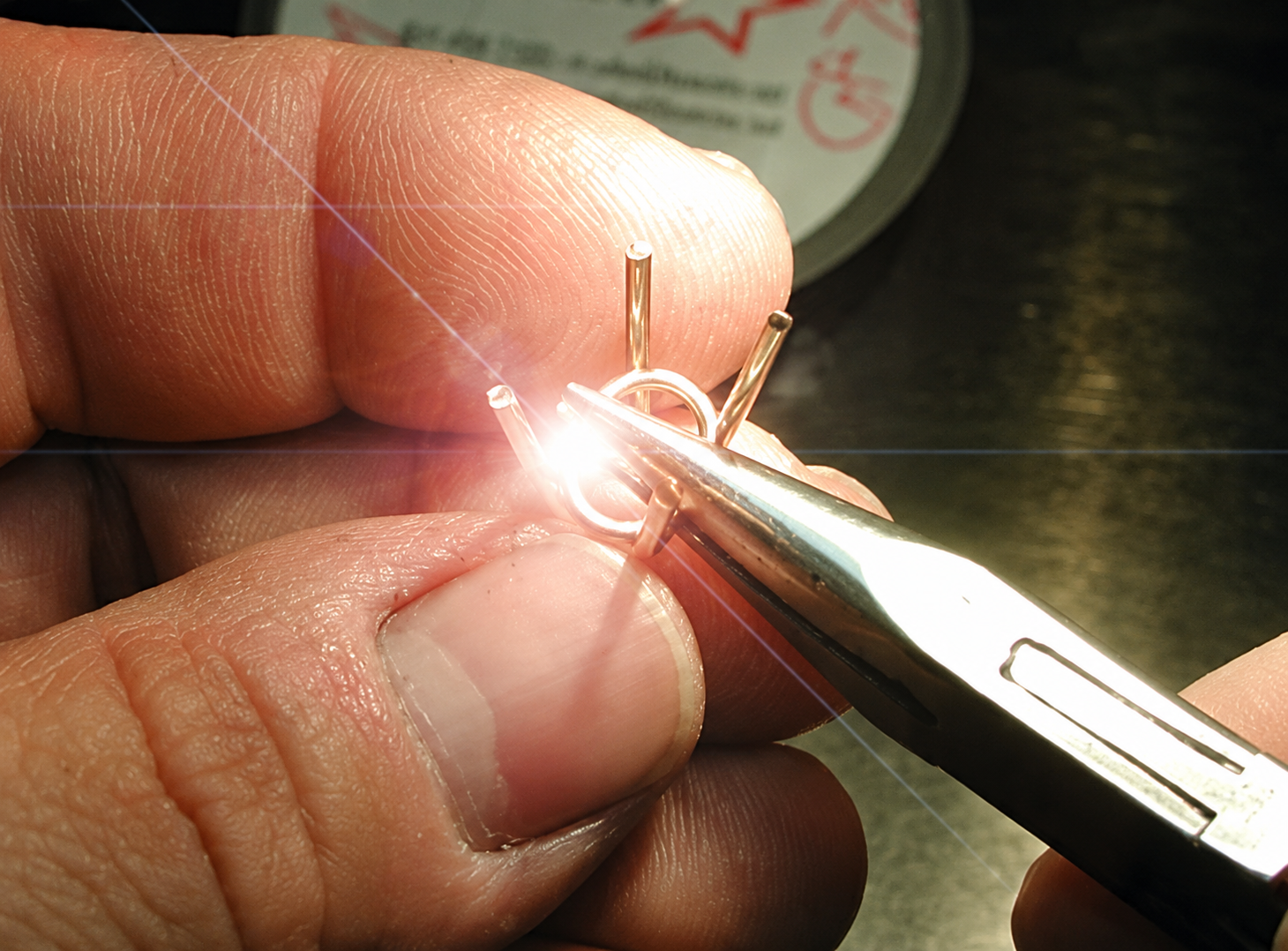
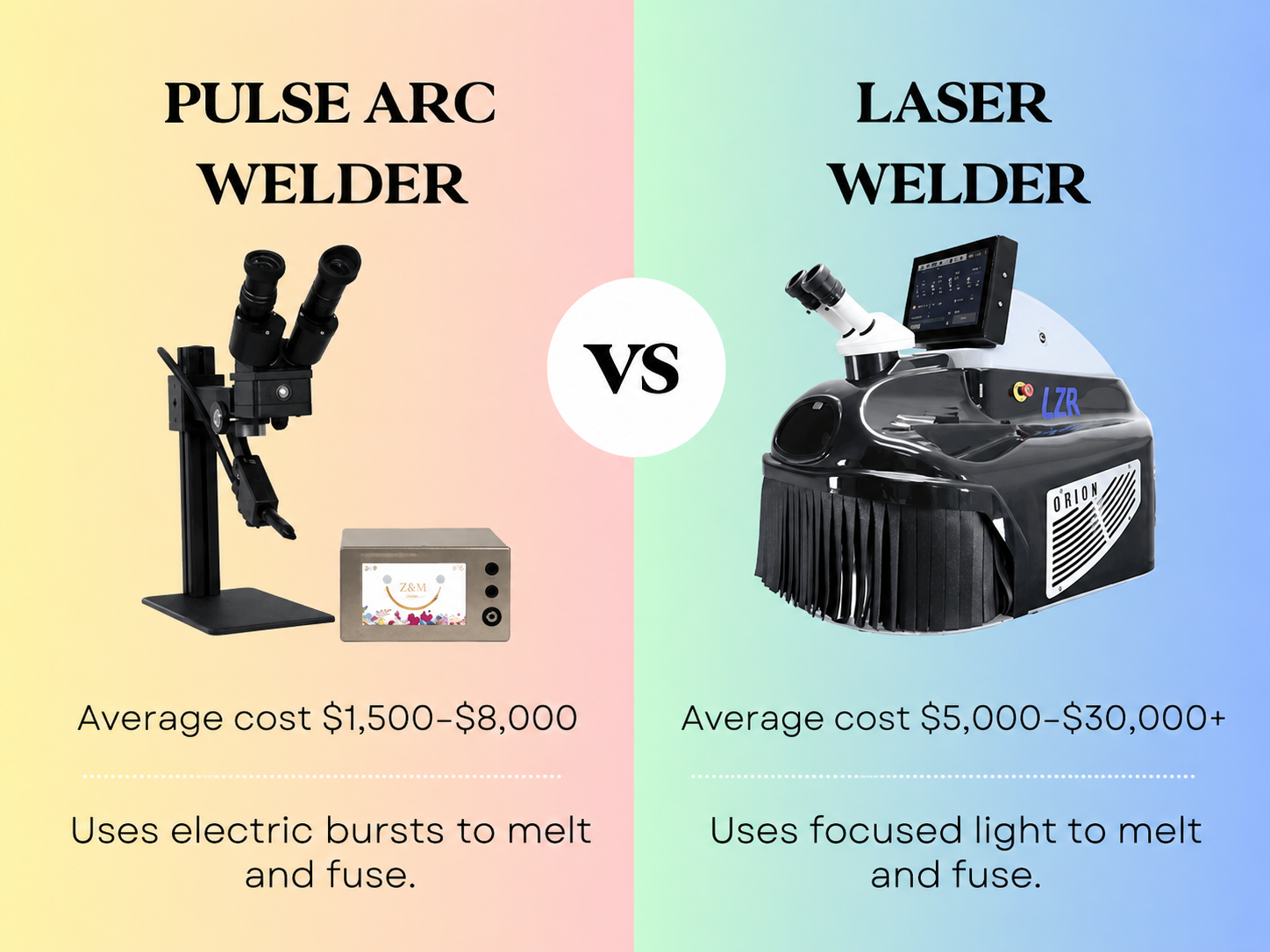
Finding the right jewelry laser welding settings starts with three things: the metal you're welding, the size of the repair, and how the weld responds to each laser pulse.
The most reliable method is to begin with your machine's recommended preset, confirm the focus and spot size, then fine-tune pulse energy and duration on matching scrap until you achieve clean, consistent fusion.
Gold, silver, and platinum respond differently to laser energy, so one parameter combination will not work equally well for every metal or repair.
Metal | Starting Approach | What to Watch |
|---|---|---|
Gold | Match the alloy and use controlled energy | Spatter, cracking, discoloration |
Silver | Confirm focus and adjust energy gradually | Weak fusion, porosity, burn-through |
Platinum | Balance energy and pulse duration for adequate fusion | Shallow welds, cracking |
The goal is not to find one perfect joule value. It is to develop a repeatable combination of pulse energy, pulse width, spot size, and frequency for your specific machine and repair.
A professional jewelry laser welder provides the parameter control needed to handle everything from fine gold chains to heavier platinum ring repairs.
Here's how to find the right settings, adjust them for each precious metal, and correct common welding problems.
1. How Do You Find the Right Laser Welding Settings?
The fastest way to find a reliable setting is to follow a controlled testing process instead of randomly changing power, pulse width, and frequency.
Start With the Metal and Repair
Before adjusting the machine, identify the alloy and the actual thickness at the welding point.
For gold, distinguish between 14K and 18K, as well as yellow, white, and rose gold. For silver, confirm whether the piece is sterling 925 or fine silver. For platinum, identify the alloy when possible.
Also consider the repair itself.
A thin chain link needs much less weld volume than a ring-sizing joint or a deep casting defect.
Clean away polishing compound, oil, oxide, and incompatible solder residue. Keep the joint properly aligned and use suitable filler wire when necessary.
A clean, well-fitted joint is easier to weld than a contaminated joint with a large gap, regardless of laser power.
Use the Closest Machine Preset
Most modern jewelry laser welders provide adjustable settings or stored programs for different materials and applications.
Select the closest manufacturer-recommended preset for the metal and repair type.
Then confirm the focal position and spot size before changing energy.
For example, a fine prong repair generally requires a smaller controlled spot than a broad ring-shank filling operation.
Avoid assuming that a setting labeled "20 J" on one YAG machine will behave exactly like a 20 J setting on another laser platform.
Different laser sources and pulse shapes can produce different welding results even when the displayed numbers are similar.
Test on Matching Scrap
Before welding valuable customer jewelry, test the settings on scrap with a similar alloy, thickness, and joint configuration.
Start with a conservative setting within the machine's recommended range.
Make a controlled test weld and inspect it under magnification.
Look for clean melting, adequate fusion, minimal spatter, and the absence of visible cracking or porosity.
If the weld is too shallow, review focus and gradually adjust the energy delivery. If the weld forms a deep crater or burns through the metal, reduce excessive energy concentration.
Adjust One Parameter at a Time
Do not increase energy, pulse width, and frequency simultaneously.
Change one variable, make another test weld, and compare the results.
This makes it easier to identify what improved the joint.
Once you find a reliable setting, save the combination together with the metal, thickness, repair type, and welding result.
A machine-specific parameter record is more valuable than a universal welding chart copied from another machine.
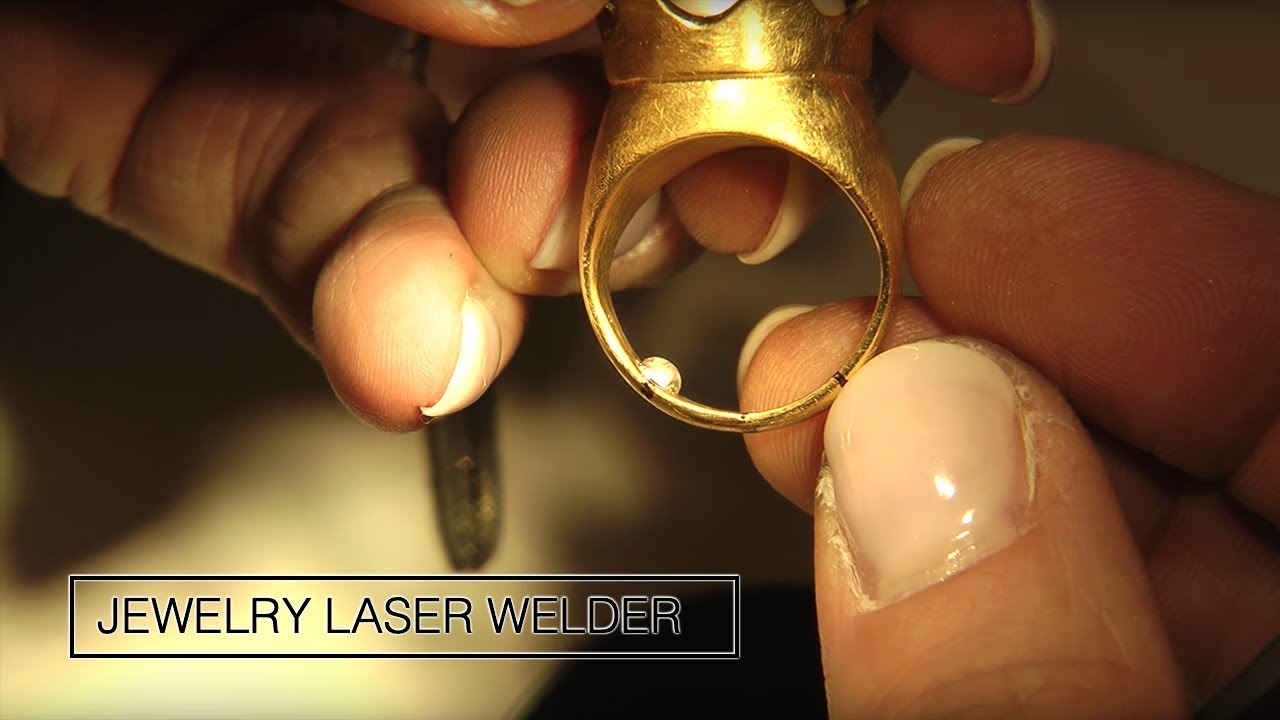
2. Which Jewelry Laser Welding Parameters Matter Most?
Four controls have the greatest influence on everyday jewelry laser welding: pulse energy, pulse width, spot size, and frequency.
Understanding what each control changes helps you correct the weld without unnecessary trial and error.
Parameter | Main Function | What Happens if Incorrect |
|---|---|---|
Pulse Energy | Controls delivered welding energy | Weak fusion or excessive melting |
Pulse Width | Controls energy delivery duration | Shallow fusion or excess heat |
Spot Size | Controls energy concentration | Burn-through or insufficient penetration |
Frequency | Controls pulse repetition rate | Excessive heat accumulation |
Pulse Energy: Finding Enough Penetration
Pulse energy influences how much metal can melt and fuse during one laser pulse.
Insufficient energy may produce a small surface mark without adequate penetration.
Excessive energy can cause cratering, spatter, and unnecessary damage around the weld.
The best setting is not necessarily the highest available energy.
Use enough energy to create reliable fusion without overheating the surrounding jewelry.
Pulse Width: Controlling Heat Delivery
Pulse width determines how long each laser pulse delivers energy to the metal.
Changing pulse width can affect penetration, weld-pool behavior, and heat spread.
For fine chains and thin prongs, controlled pulse duration helps limit unnecessary heating.
Thicker repair sections may require a different balance between energy and duration.
However, longer pulses do not automatically mean stronger welds. The result depends on the alloy, spot size, and laser source.
Spot Size: Balancing Precision and Fusion
Spot size controls how concentrated the laser energy becomes.
A smaller spot concentrates energy into a smaller area, which can be useful for fine repairs but also increases the risk of cratering.
A larger spot spreads energy over a broader area, making it useful for filling and smoothing when appropriately adjusted.
As a general reference, fine jewelry repairs may use small spots around 0.2–0.4 mm, while broader repair sections may benefit from larger adjustable spots.
The actual spot should always match the joint size and the capabilities of the machine.
Frequency: Avoiding Excessive Heat Buildup
Frequency determines how quickly laser pulses repeat.
Higher frequency can help operators create overlapping weld spots more quickly, but repeated pulses in the same area can accumulate heat.
That becomes particularly important when repairing thin gold, delicate chain links, or crack-sensitive alloys.
If the workpiece begins overheating, reducing pulse repetition and allowing cooling time may be more useful than changing energy immediately.
For a laser welder for jewelry, independently adjustable parameters give the operator more flexibility than relying on a single fixed preset.

3. How Should Settings Change for Gold, Silver, and Platinum?
Gold, silver, and platinum have different physical properties and alloy compositions.
This is why the same jewelry laser welding machine may need different settings for each material.
Gold Laser Welding Settings
Gold is commonly used in laser jewelry repair, but the exact alloy affects how it responds to welding.
Yellow gold, white gold, and rose gold should not automatically use identical parameters.
For fine gold chains, prongs, and small cracks, start with a controlled spot size and moderate energy appropriate for the machine.
Increase energy gradually only when additional fusion is required.
For heavier ring shanks or deeper repairs, adjust the weld size and pulse characteristics to suit the section rather than attempting to complete the repair with one aggressive pulse.
White gold requires particular care. Some nickel-containing alloys can be more susceptible to cracking, especially when previous repairs, internal stress, or incompatible filler are involved.
If a gold weld develops black spots, spatter, or craters, inspect surface contamination, focus, and shielding before simply reducing or increasing power.
Darkening around a previously rhodium-plated white-gold repair may also reflect local plating removal rather than a defective weld.
Silver Laser Welding Settings
Silver is highly reflective and conducts heat rapidly.
These properties can make it more difficult to establish a stable molten pool than with many gold alloys.
When welding sterling silver, confirm the focus and surface cleanliness before increasing energy.
If the joint shows insufficient fusion, gradually adjust energy or pulse characteristics within the machine's approved range.
Avoid making large increases at once.
Excessive energy concentration can cause pitting or burn-through, particularly on thin chain links and hollow jewelry.
Silver repairs may also develop porosity when contamination, existing casting defects, or unsuitable filler affects the weld.
If bubbling appears, inspect the material and cleaning procedure before changing multiple laser parameters.
Platinum Laser Welding Settings
Platinum has a higher melting temperature than gold or silver and requires an appropriate energy-delivery profile for reliable fusion.
Begin with the manufacturer's platinum preset and confirm that the joint is properly prepared and focused.
For a small platinum prong or crack, use a controlled spot that matches the repair area.
For thicker platinum sections, adjust energy and pulse duration gradually until the weld achieves adequate penetration.
Do not judge the repair only by the appearance of the surface.
A smooth-looking weld may still lack sufficient fusion inside the joint.
If cracking occurs, inspect the alloy, filler compatibility, contamination, and existing damage before adding more energy.
Repeatedly welding the same defective area without correcting its cause can make the repair more difficult.
What These Differences Mean
There is no reliable universal statement such as:
Gold = 15 J, Silver = 25 J, Platinum = 30 J
Actual settings depend on the laser source, spot characteristics, alloy, thickness, and required weld geometry.
A jewelry laser welding machine should therefore provide enough adjustment range to accommodate all three precious metals rather than depending entirely on fixed material presets.
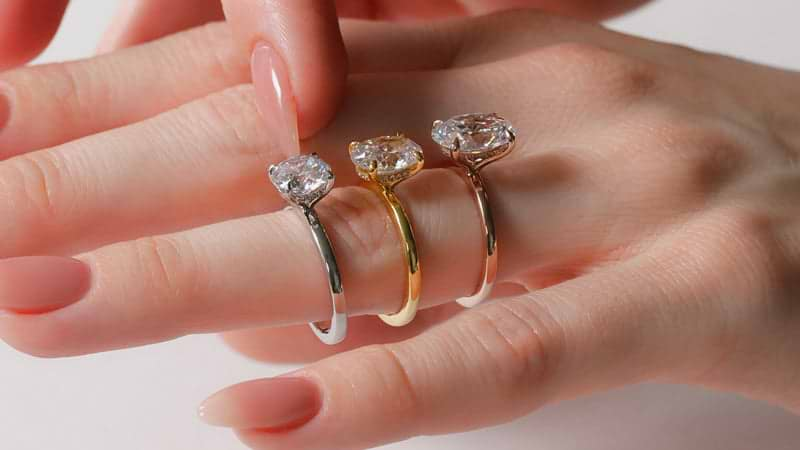
4. How Do You Fix Common Laser Welding Problems?
When a jewelry laser weld fails, the best first step is to identify the defect.
Do not assume every problem can be corrected by changing joules.
Focus, contamination, alloy composition, filler compatibility, and joint alignment can be equally important.
Weld Problem | Possible Cause | What to Check First |
|---|---|---|
No Visible Fusion | Low energy or incorrect focus | Confirm focus, then adjust energy gradually |
Weak or Shallow Weld | Insufficient penetration or poor joint fit | Check alignment and pulse parameters |
Crater or Burn-Through | Excessive energy concentration | Reduce energy or adjust spot size |
Porosity or Black Spots | Contamination, oxidation, or shielding problems | Clean and inspect the weld environment |
Cracking | Alloy, filler, stress, or thermal issues | Inspect material and filler before rewelding |
Read the Weld Before Changing Settings
A crater does not always mean the pulse duration is too long.
Porosity does not always mean the argon flow is too low.
A weak weld does not always mean you need more power.
Different defects can produce similar visible symptoms.
The correct approach is to inspect the metal, identify the most likely cause, and adjust one variable at a time.
When the defect persists, test again on matching scrap rather than repeatedly reheating the customer's jewelry.
Save Successful Settings for Future Repairs
Once a repair produces a consistent result, record the settings.
A useful record should include:
Machine model and laser source
Metal alloy and repair type
Pulse energy and width
Spot size and frequency
Final welding result
For example, a repair shop may maintain separate starting programs for 14K yellow-gold rings, 18K white-gold prongs, sterling silver chain links, and Pt950 repairs.
These records reduce repeated setup work and make it easier for multiple technicians to produce consistent results.
A laser welder for jewelry repair with program storage can make this process more convenient for shops handling recurring repair types.
Conclusion
Finding the right jewelry laser welding settings is not about memorizing one joule value for gold, silver, or platinum.
It is about developing a repeatable welding process for the metal and repair in front of you.
The most reliable sequence is:
Identify the alloy → Prepare the joint → Confirm focus → Test the preset → Adjust one parameter → Inspect and save
Gold requires attention to alloy differences and filler compatibility.
Silver often needs careful energy adjustment because of its reflectivity and rapid heat transfer.
Platinum requires sufficient fusion while avoiding unnecessary heat accumulation and repeated welding over defects.
For all three metals, controlled testing is more reliable than copying settings from a different machine.
A professional jewelry welder should give you enough control over pulse energy, pulse width, spot size, and frequency to develop settings for both delicate repairs and heavier jewelry.
If you are unsure which machine or settings fit your typical repairs, send JewelryLaserNova your metal type, alloy, joint thickness, and repair photos.
Our team can help you select an appropriate jewelry laser welder and provide application-specific welding guidance or sample welding demonstrations for gold, silver, and platinum.