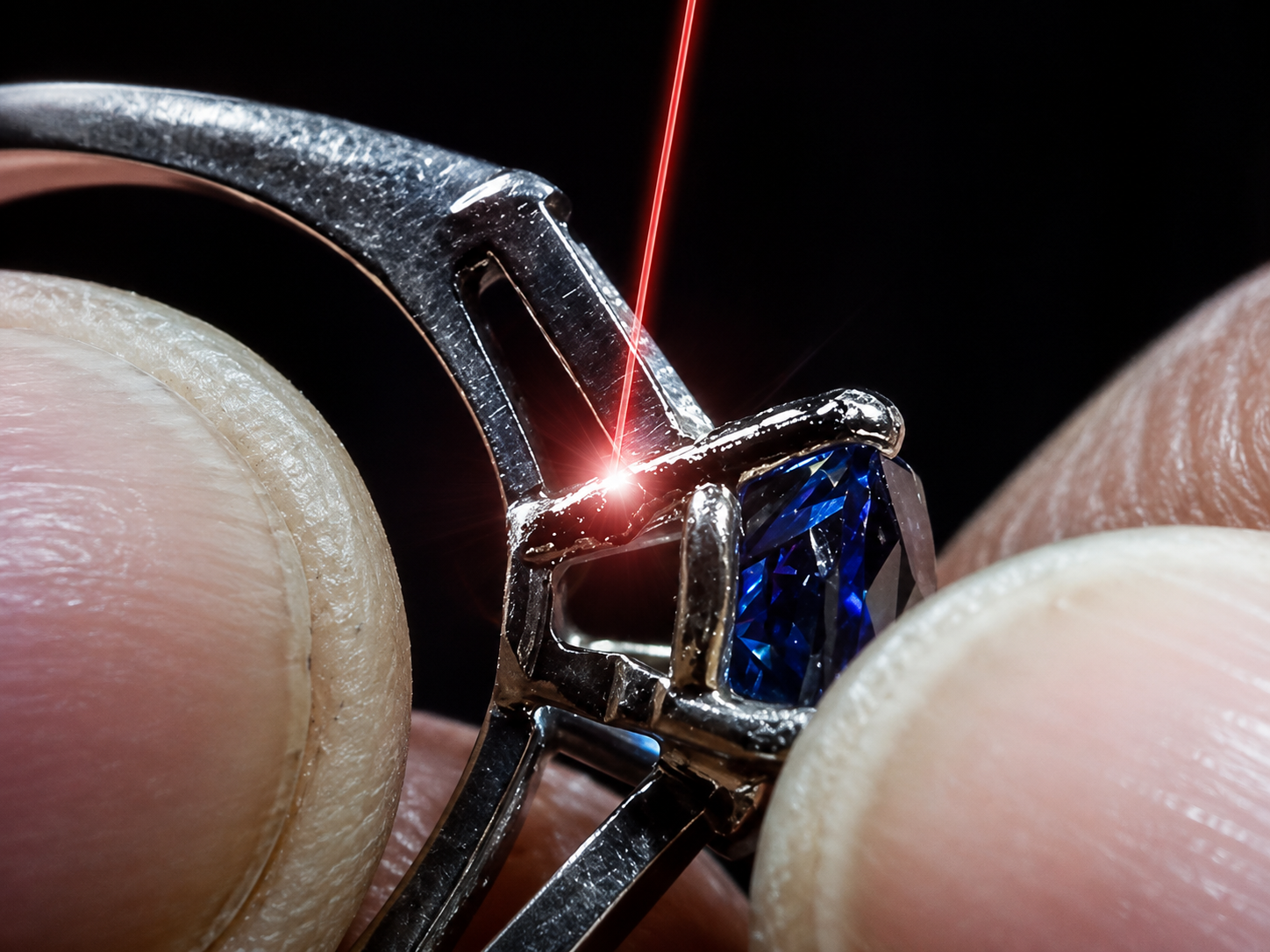
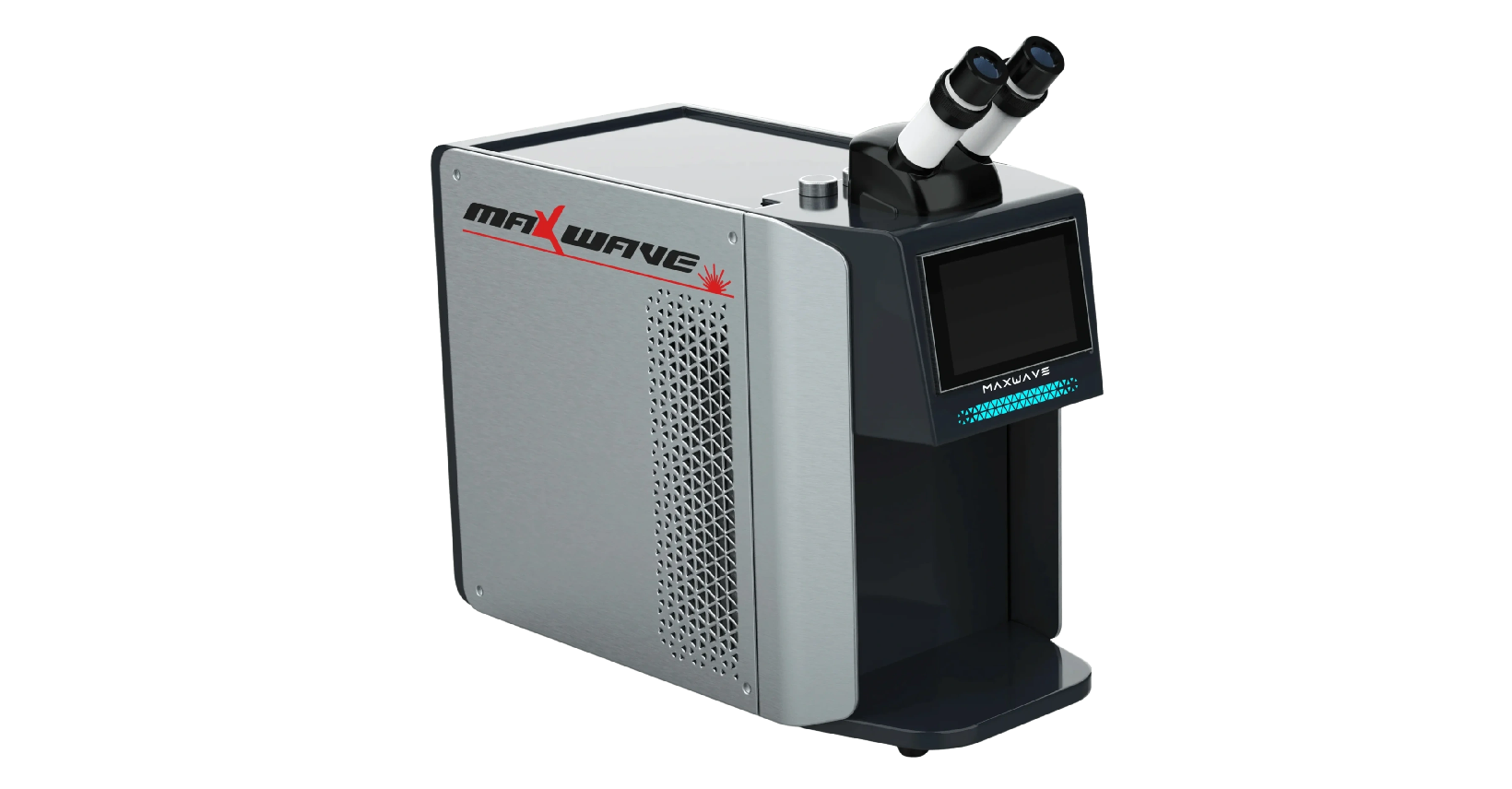
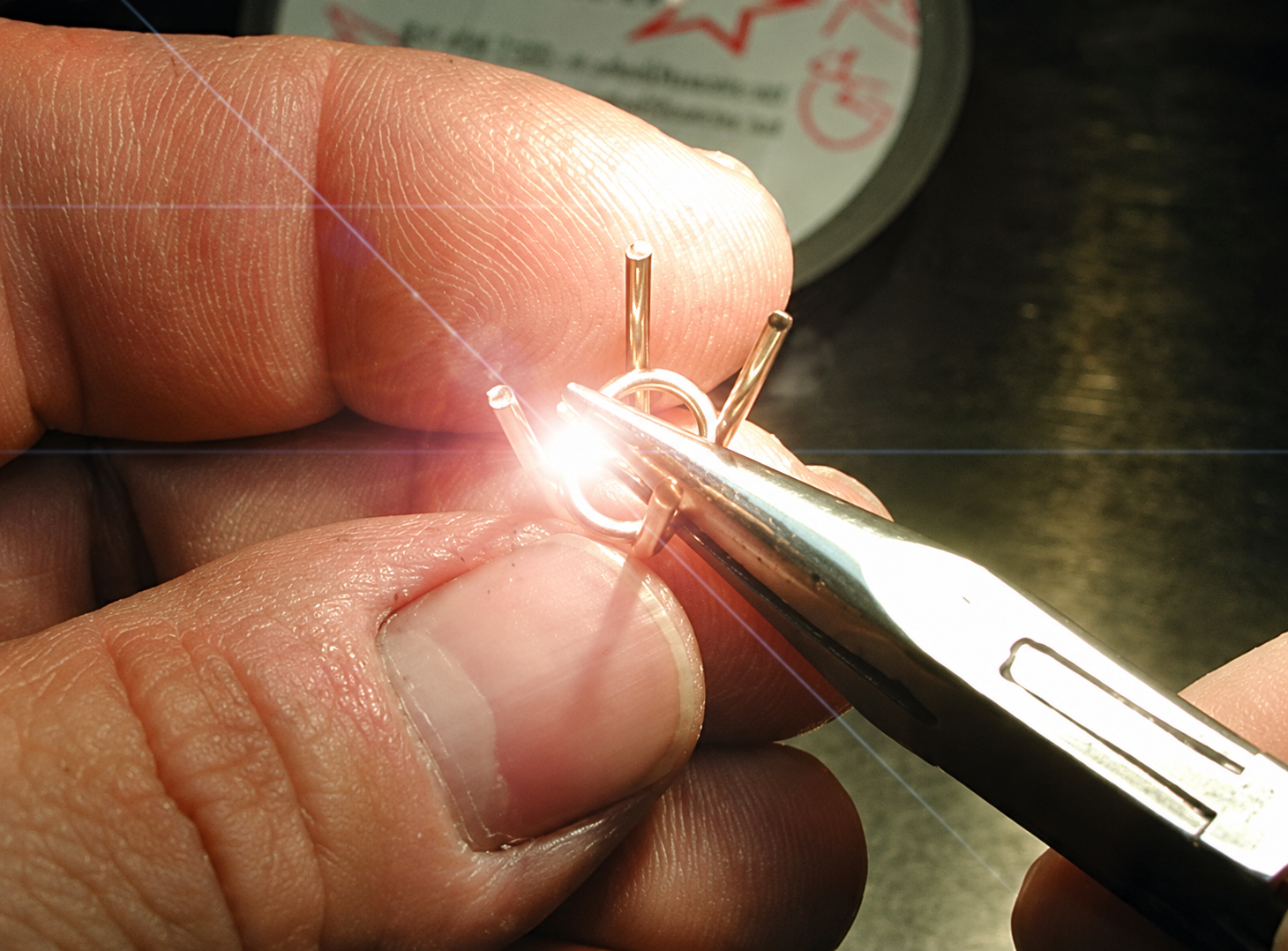
Yes, a jewelry laser welder is relatively easy to learn at a basic level—but learning how to turn the machine on is very different from being ready to repair a customer's diamond ring.
Most beginners can learn the basic controls, focusing, positioning and simple spot welding after a short period of guided practice. What takes longer is developing enough judgment to switch confidently between gold, silver and platinum, control filler wire, rebuild worn prongs and work close to valuable stones.
For someone considering a jewelry laser welder, a realistic expectation is:
Stage | What You Should Expect |
|---|---|
First few hours | Learn safety, focusing, controls and basic spot welding |
First few days | Practice repeatable welds on scrap and simple joints |
First few weeks | Begin handling common repair exercises more consistently |
After continued practice | Move into delicate prongs, chains, stone-set and higher-value work |
Your previous bench experience changes this timeline significantly.
An experienced goldsmith who already understands metal behavior, joint fit-up and filler material will normally adapt much faster than someone with no jewelry repair experience.
So the better question is not:
“How many hours until I master laser welding?”
It is:
“How long until I can complete my normal repair work consistently without experimenting on a customer's jewelry?”
1. How Hard Is It to Learn a Jewelry Laser Welder?
The machine itself is not usually the hardest part.
A typical laser welder for jewelry gives the operator only a handful of core variables to understand: energy or output level, pulse duration, spot size and pulse frequency. You also need to learn microscope positioning, focusing, filler-wire control and shielding gas where required.
These controls can be understood relatively quickly.
The harder skill is recognizing what the metal is telling you.
A beginner eventually needs to know whether a weld needs more energy, a smaller spot, better fit-up, different filler wire or simply better positioning.
That judgment develops through practice.
Existing Jewelers Usually Learn Faster
If you already work with torch soldering, ring sizing, prong rebuilding or custom fabrication, you already understand many of the difficult parts:
How gold behaves.
Why silver responds differently.
How thin metal can collapse.
How joint gaps affect a repair.
How filler material should be added.
Where nearby stones create risk.
You are mainly learning how to apply that knowledge through a laser instead of a flame.
That is why professional bench jewelers often find the learning curve surprisingly manageable.
Complete Beginners Need More Time
If you have never repaired jewelry before, learning the machine and learning jewelry repair happen at the same time.
That is a much bigger task.
A laser can make localized heating easier, but it does not teach you:
Whether a prong should be rebuilt or replaced.
Which filler wire matches the piece.
Whether an emerald should remain in place.
How much metal needs to be added.
Whether a finished joint is structurally sound.
For a complete beginner, a jewelry laser welding machine should therefore be viewed as a tool you learn alongside basic jewelry-repair skills—not a machine that automatically turns someone into a jeweler.
Which Jobs Are Easier to Learn?
Start with repairs where the target area is easy to see and the consequences of a small mistake are limited.
Useful beginner exercises include simple spot welds, joining clean pieces of scrap, short seams, porosity filling and basic ring-shank practice.
After those become repeatable, move toward chain links, clasps and simple prong work.
More advanced work includes pavé settings, very fine chains, complicated multi-metal assemblies, difficult silver repairs and welding immediately beside heat-sensitive or valuable stones.
The original draft makes the same useful distinction between relatively straightforward exercises and advanced stone-set or complex repair work.
Do not judge your progress because another operator can weld a chain after one afternoon.
The goal is repeatability, not completing one successful weld.

2. What Should a Beginner Learn First?
The fastest way to learn jewelry laser welding is not to start with increasingly complicated settings.
Start with a repeatable workflow.
Learn Focusing and Positioning Before Chasing Power
A perfectly chosen parameter does not help if the beam is not positioned where you think it is.
Before serious welding practice, become comfortable with the microscope or camera system, focal position, crosshair alignment and foot pedal.
Practice repeatedly placing a single pulse exactly where you want it.
This sounds basic, but precision positioning is one of the foundations of jewelry laser repair.
Practice on Scrap Before Precious Metal
Do not learn by experimenting on customer jewelry.
Use inexpensive scrap material and practice pieces first.
Start with single pulses and observe:
How large is the weld spot?
How deep is the melt?
Is there spatter?
Did the metal discolor?
Did you create a crater?
Then change one parameter at a time.
This is much more useful than randomly adjusting several settings until one weld happens to look good.
The original draft correctly identifies practicing on scrap and recording successful settings as two of the easiest ways to reduce costly beginner mistakes.
Do Not Copy Settings Blindly
There is no universal jewelry laser setting.
Gold, silver, platinum and palladium do not behave identically. Even two gold pieces of the same karat may use different alloys and thicknesses.
Machine controls also differ.
A YAG machine that displays voltage and pulse duration cannot always be compared directly with a QCW system using another control architecture.
So instead of copying:
250 V + 4 ms + 0.6 mm
from an online article, learn what changing each control does to the weld pool.
A good jewelry laser welding training program should teach parameter logic, not just provide a sheet of preset numbers.
Learn One Metal Before Trying Everything
For many jewelry workshops, gold is the logical starting material because it represents a large share of repair work.
Once you can produce repeatable welds on your normal gold alloy, introduce another metal.
Silver usually deserves additional practice because it reflects laser energy and conducts heat efficiently.
Platinum behaves differently again.
Building experience one material at a time makes troubleshooting much easier than switching continuously between several metals during your first practice sessions.
Keep a Simple Parameter Log
You do not need complicated software.
Record:
Material.
Karat or alloy.
Approximate thickness.
Repair type.
Spot size.
Energy/output.
Pulse duration.
Frequency.
Filler wire.
Result.
A good weld becomes much more valuable when you know how you produced it.
Over time, this becomes your own workshop parameter library.
Learn Filler Wire Early
Beginners often focus entirely on making the laser spot.
But many jewelry repairs require adding metal.
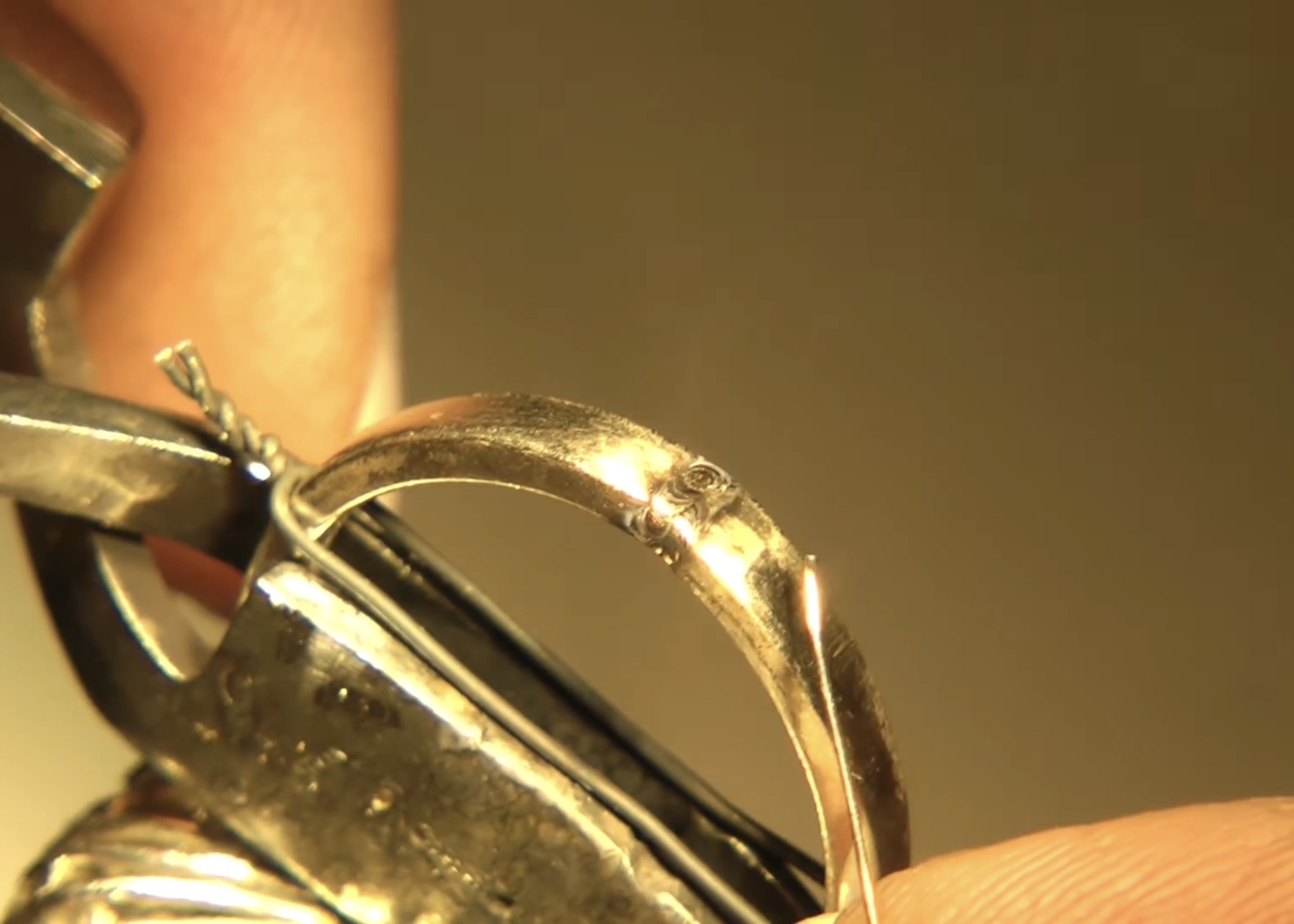
Practice holding and feeding filler wire into the weld pool while keeping the joint under the microscope.
That skill becomes essential for prong rebuilding, porosity filling, shank repair and restoration work.
Use Training to Shorten Trial and Error
Self-study is useful for understanding terminology and becoming familiar with the controls.
But hands-on instruction becomes more valuable once you start performing real repairs.
A trainer can immediately identify problems such as poor focus, incorrect filler-wire angle, unnecessary heat input or a joint that should have been prepared differently.
If you are buying a professional jewelry welder, ask what training is included with the machine.
You should ideally receive help with machine setup, focusing, common metals, basic maintenance and sample repairs—not simply a video showing where the power button is.
3. When Are You Ready to Repair Customer Jewelry?
Do not decide based only on how many hours you have spent at the machine.
You are ready when your results become predictable.
Before working independently on customer jewelry, you should be able to repeat the same weld several times on scrap without constantly changing settings.
You should also understand what to do when the weld does not look right.
For example:
If penetration is too shallow, do you understand which parameter to adjust?
If the weld is excessively wide, can you reduce heat input?
If there is porosity, do you check contamination and fit-up before simply increasing power?
If silver behaves differently from gold, do you know why?
That troubleshooting ability is more important than hitting a particular number of training hours.
Start With Lower-Risk Customer Repairs
Your first independent customer repair should probably not be:
An antique emerald ring.
A complex pavé setting.
A high-value platinum heirloom.
A very fine chain next to multiple stones.
Start with straightforward jobs where you already understand the repair procedure.
Then gradually move toward more difficult work as your confidence and repeatability improve.
Stone-Set Jewelry Requires Another Level of Judgment
One of the biggest advantages of a laser welder for jewelry repair is the ability to work locally without heating the entire piece.
That can make it possible to repair prongs, resize rings or rebuild metal while some stones remain in place.
But this should not be a beginner shortcut.
Different gemstones and treatments respond differently to heat, and an operator needs enough experience to know when a stone can remain and when it should be removed.
Localized heat is an advantage.
It is not permission to ignore gemstone risk.
What About Silver?
Silver is another good benchmark for readiness.
If your business repairs sterling silver regularly, make sure you have practiced it before accepting customer jobs.
A beginner who performs well only on yellow gold has not necessarily learned the full operating range of the machine.
Silver's thermal conductivity and reflectivity can require different parameter decisions.
The same applies to platinum if high-end engagement-ring repair is part of your target business.
A Simple Readiness Test
Before moving from training pieces to real customer work, ask yourself:
Can I focus and place the pulse accurately every time?
Can I make repeatable welds without random parameter changes?
Do I understand how gold, silver and platinum differ?
Can I add filler wire accurately?
Can I recognize porosity, incomplete fusion and excessive heat?
Do I know when a stone should be removed?
Can I perform basic machine maintenance and lens inspection?
If several answers are still “no,” keep practicing.
There is no benefit in rushing.

Conclusion
So, is a jewelry laser welder easy to learn?
The basic machine operation is relatively easy to learn. Professional jewelry repair takes longer.
An experienced jeweler can often become comfortable with the controls quickly because they already understand alloys, joint preparation, filler material and repair strategy.
A complete beginner needs more practice because they are learning both the laser and jewelry repair at the same time.
The best learning sequence is simple:
Learn the machine → practice positioning → make single welds on scrap → build repeatable seams → introduce filler wire → practice different metals → move into common repairs → attempt delicate stone-set work only after your results become consistent.
Avoid measuring progress only by hours.
Measure it by repeatability.
The best jewelry laser welder for a beginner is also not necessarily the cheapest or most powerful machine. Look for intuitive controls, a clear microscope or camera system, stable low-energy adjustment, useful parameter presets and—most importantly—good training and technical support.
Before buying, send JewelryLaserNova examples of the repairs you expect to perform, the metals you work with and your current bench experience. The team can recommend a suitable configuration and demonstrate typical repair workflows so you know what the learning process looks like before the machine arrives.