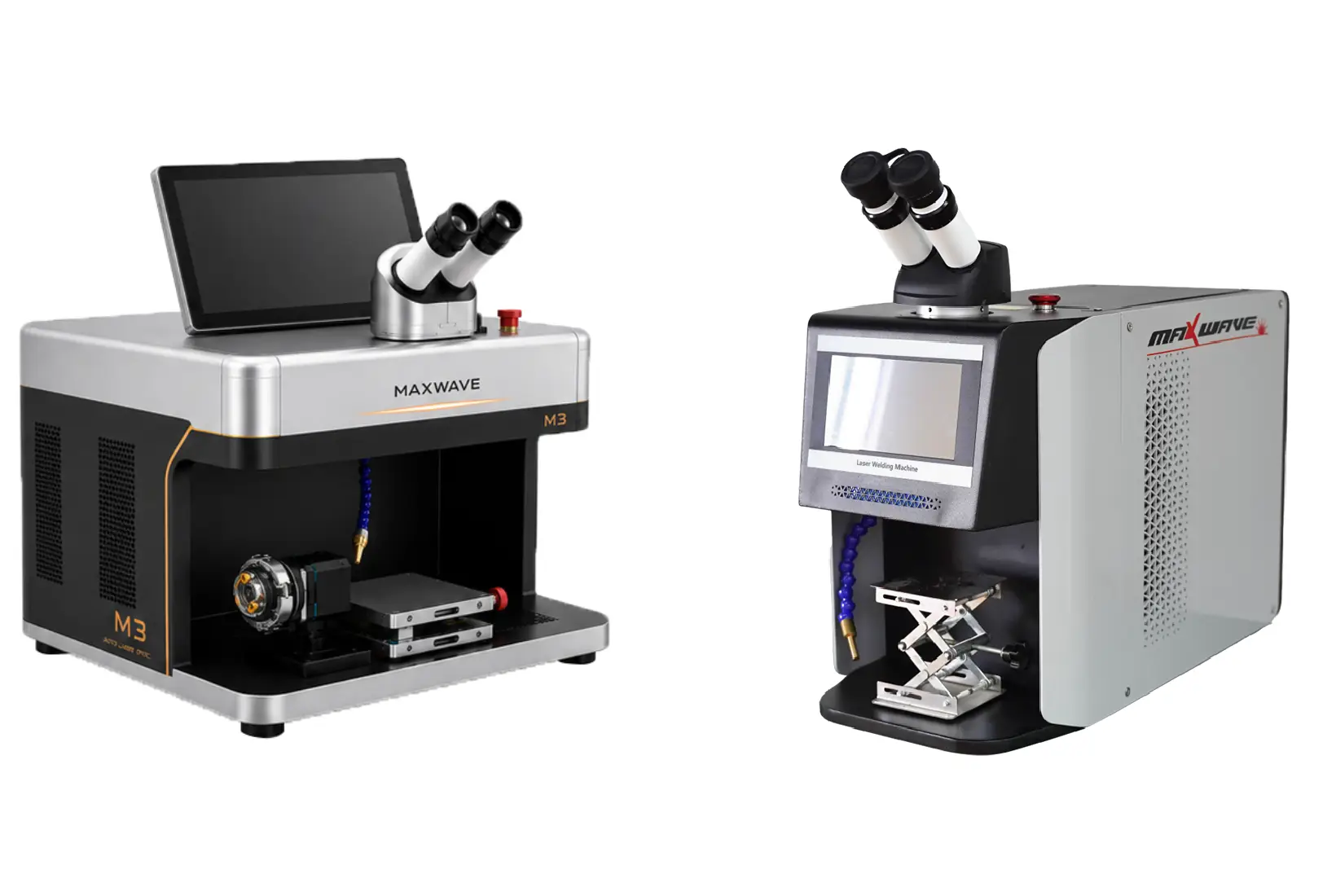
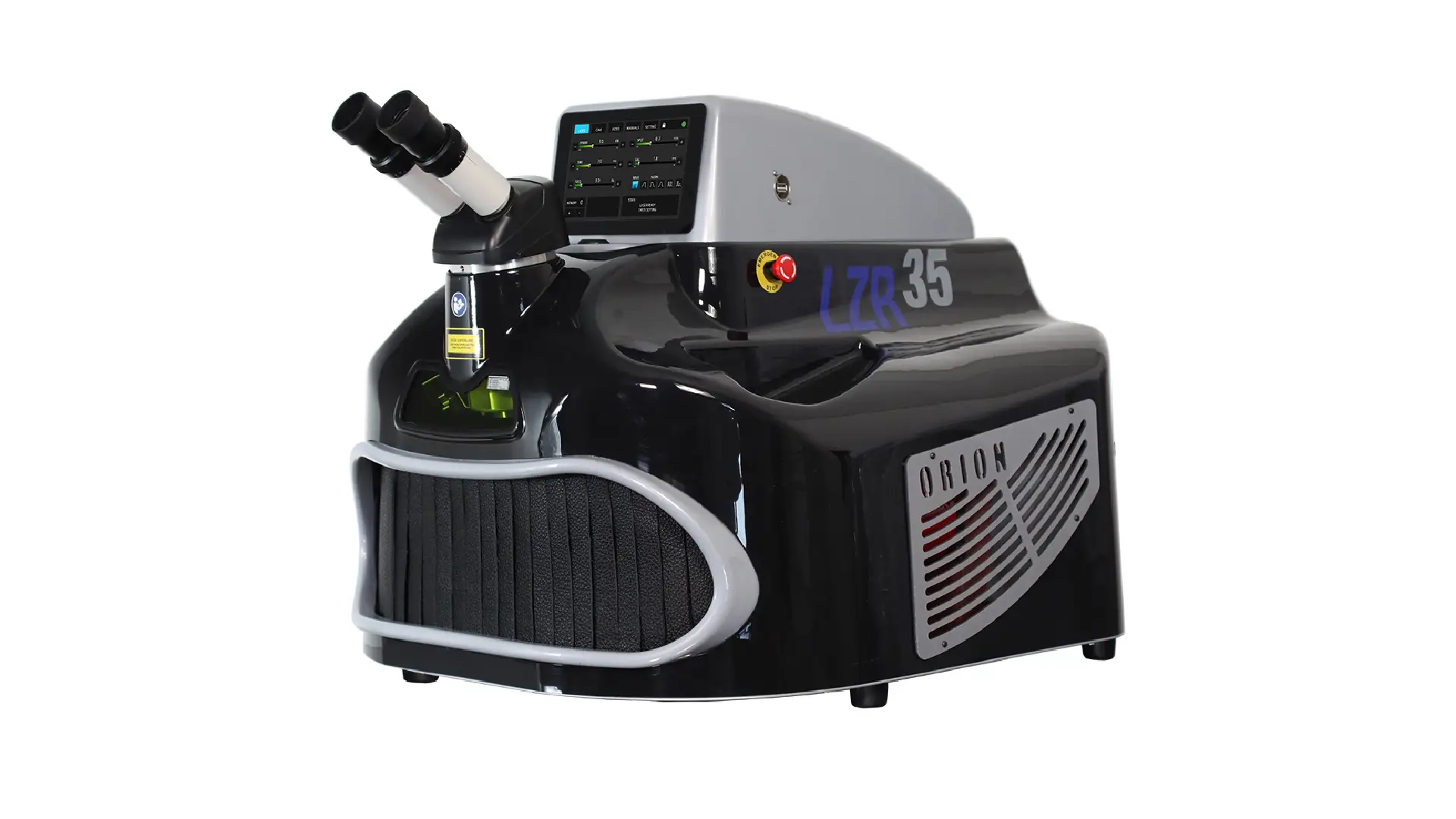
How many watts does a jewelry laser welder really need?
For most buyers, the answer is simpler than the specification sheets make it look:
60W is usually enough for fine jewelry repair and lighter bench work.
120W is the most flexible choice for a general jewelry repair shop.
200W makes more sense for thicker pieces, demanding repairs or higher-volume production.
But there is an important catch:
A 200W jewelry laser welder is not automatically “better” than a 60W or 120W machine for every repair.
Fine chains, small prongs and delicate stone-set work benefit from precise low-energy control. Heavy rings and larger castings need more energy headroom. The right jewelry laser welder is therefore the one that matches the work that actually comes across your bench.
Here is the quickest way to compare the three power levels:
Power | Best For | Typical Jewelry Work | Main Reason to Choose It |
|---|---|---|---|
60W | Fine repair, smaller shops | Chains, jump rings, prongs, small cracks, light ring repair | Lower investment and good fine-work control |
120W | General repair shops | Rings, chains, prongs, gold, silver, platinum, porosity, mixed repairs | Wider working range |
200W | Heavy repair / production | Thick rings, larger castings, bangles, demanding silver/platinum work, repeated production | More energy and workload headroom |
Not sure? | Mixed jewelry repair | A little of everything | Start by comparing 120W carefully |
For many established repair shops, 120W is the practical middle ground because it gives more working headroom than 60W without automatically paying for 200W capacity that may rarely be used. JewelryLaserNova currently positions its 60W / 120W / 200W MW-QW series in essentially this way.
1. What Can 60W, 120W and 200W Jewelry Laser Welders Actually Handle?
The easiest way to choose power is to forget the specification sheet for a moment and look at the jewelry you repair every week.
60W: Best for Fine Repair and Lighter Jewelry Work
A 60W laser welder for jewelry can already cover a large percentage of common bench repairs.
It is particularly well suited to work where the weld area is small and precision matters more than maximum energy.
Typical jobs include fine chains, jump rings, clasps, small prongs, earring posts, localized porosity, small cracks and light ring repair.
For these jobs, more power is not necessarily an advantage.
If you are welding a very fine chain link, the challenge is usually not “How do I get more energy into this piece?”
It is:
How do I place a small, repeatable weld without blowing through the link or overheating the surrounding area?
That is why 60W can be a very sensible choice for a small jewelry repair shop, permanent-jewelry business or bench jeweler whose workload is dominated by fine pieces.
The original draft correctly identifies this power class with lighter jewelry repair, chains and prong work.
The limitation appears when heavier repairs become routine rather than occasional.
If you repeatedly need to weld substantial ring shanks, larger silver pieces or deeper joints, you may find yourself operating too close to the machine's upper capability.
That is where 120W becomes more attractive.
120W: Best for a General Jewelry Repair Shop
A 120W jewelry laser welding machine is less about doing one special repair and more about covering a wider variety of everyday jobs.
A general repair shop may see a fine chain, an engagement-ring resize, a silver bracelet, a platinum prong and a casting defect all in the same week.
That mixed workload benefits from additional headroom.
Typical 120W applications include ring resizing, chain and clasp repair, prong rebuilding, porosity filling, crack repair, gold repair, silver repair, platinum repair and many stone-set jewelry jobs.
The important advantage is not simply:
120W produces twice as much power as 60W.
It is that a suitable 120W system can still be turned down for fine work while giving the operator more available energy when the repair demands it.
For buyers who want one machine to cover most normal repair work, this makes the 120W class particularly attractive.
Current JewelryLaserNova product guidance similarly positions the 120W configuration as the practical starting point for shops handling daily gold, silver and platinum repairs.
200W: Best When Heavy Work or Throughput Justifies It
A 200W jewelry welder starts making more sense when the jobs themselves become more demanding.
Think thicker ring sections, larger castings, substantial bangles, heavier silver pieces, bigger localized rebuilds or repetitive production work.
The additional capability gives the operator more headroom when a larger weld pool or greater energy delivery is genuinely required.
But a 200W machine should solve a real problem.
If 80% of your business is chain repair and prong retipping, buying 200W purely because:
“More watts must be more professional.”
is not a strong purchasing reason.
A repair shop that regularly handles heavy pieces is different from a repair shop that occasionally sees one.
That distinction matters.
Choose for your hardest regular job—not the heaviest piece you might see once a year.
This is one of the main areas where the original draft was directionally correct but too rigid. It linked fixed daily job counts and exact material thicknesses to each power level. Those figures should not be treated as universal limits because machine design and pulse capability vary substantially.
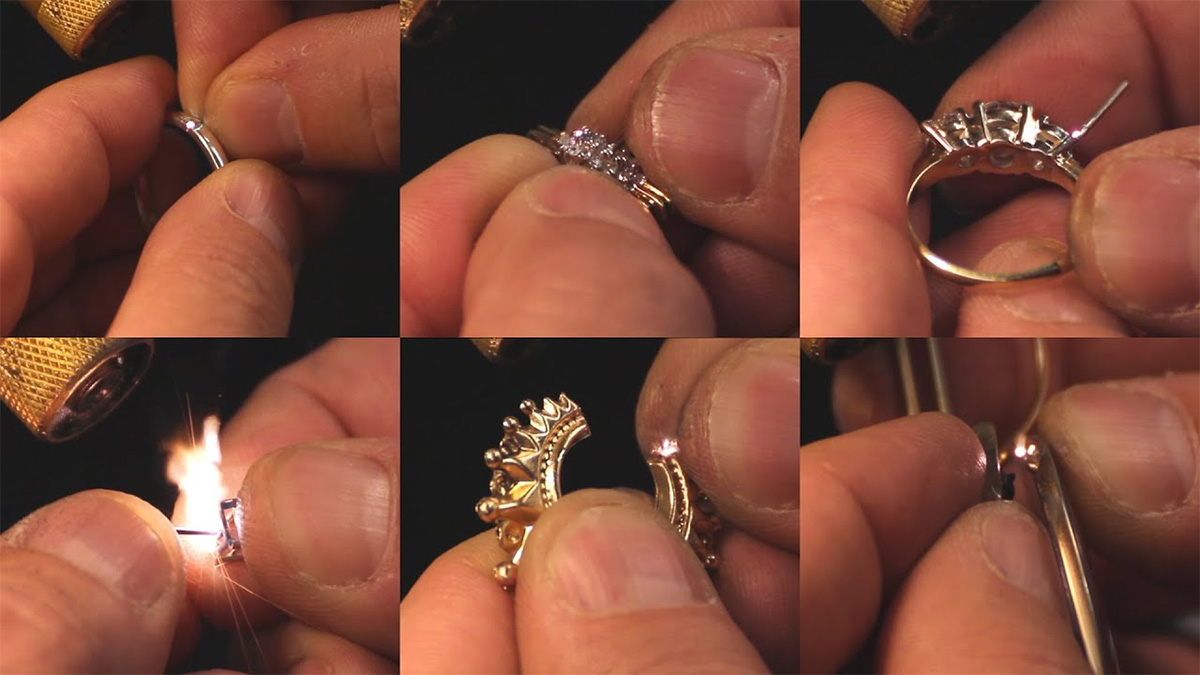
2. Why Jewelry Laser Welder Wattage Does Not Tell the Whole Story
This section is essential for SEO because it answers the natural follow-up search:
“Is higher wattage always better for jewelry laser welding?”
The answer is no.
Two machines can both say 120W and still have very different welding capabilities.
That is because jewelry laser welding is usually a pulsed process.
You should therefore compare at least four additional specifications:
Specification | Why It Matters |
|---|---|
Pulse energy (J) | Determines how much energy can be delivered in one pulse |
Peak power | Shows how intense the individual pulse can become |
Pulse width (ms) | Influences weld-pool development and heat input |
Spot size (mm) | Determines how concentrated or broad the weld area is |
Frequency (Hz) | Affects pulse repetition and production behavior |
Duty cycle / cooling | Determines how comfortably the machine handles repeated work |
The original draft correctly recognizes that average wattage, peak power and pulse energy are different measurements.
Average Power Is Not Peak Power
This is particularly important because jewelry welder specifications can be confusing.
A machine may advertise:
60W average power
while producing much higher peak power during an individual pulse.
Another machine may use “200W” differently in its marketing.
That means you should not assume that two machines from different technologies or manufacturers are directly comparable simply because both display a watt number.
This is especially relevant when comparing YAG and QCW jewelry laser welders.
Compare machines within the same technology first. If you compare different technologies, look at pulse behavior and the actual sample weld—not only nominal wattage.
JewelryLaserNova's current QCW series, for example, is offered in 60W, 120W and 200W configurations while the series also spans substantially higher peak powers than those average ratings.
Pulse Energy Matters for Heavy Repairs
Pulse energy tells you how much energy is available in an individual laser pulse.
More available pulse energy can be useful when working on larger sections or when more metal needs to be melted.
But maximum pulse energy is not the goal on every job.
On a fine chain, excessive energy can create burn-through.
On a tiny prong, it can make the weld pool larger than necessary.
A good machine therefore needs both:
Enough upper-end capability for difficult repairs
and
stable low-energy control for delicate repairs.
That is a better buying criterion than simply selecting the largest watt number.
Spot Size Matters for Precision Work
If your business focuses heavily on:
Prong repair.
Fine chains.
Small porosity.
Cracks.
Stone-set jewelry.
then spot-size control matters enormously.
A smaller controllable spot helps concentrate the weld where the material actually needs to be added.
A wider spot becomes more useful when working across a larger repair area.
For a laser welder for jewelry repair, the question should therefore become:
“What is the usable spot-size and pulse-energy range?”
rather than simply:
“How many watts is it?”
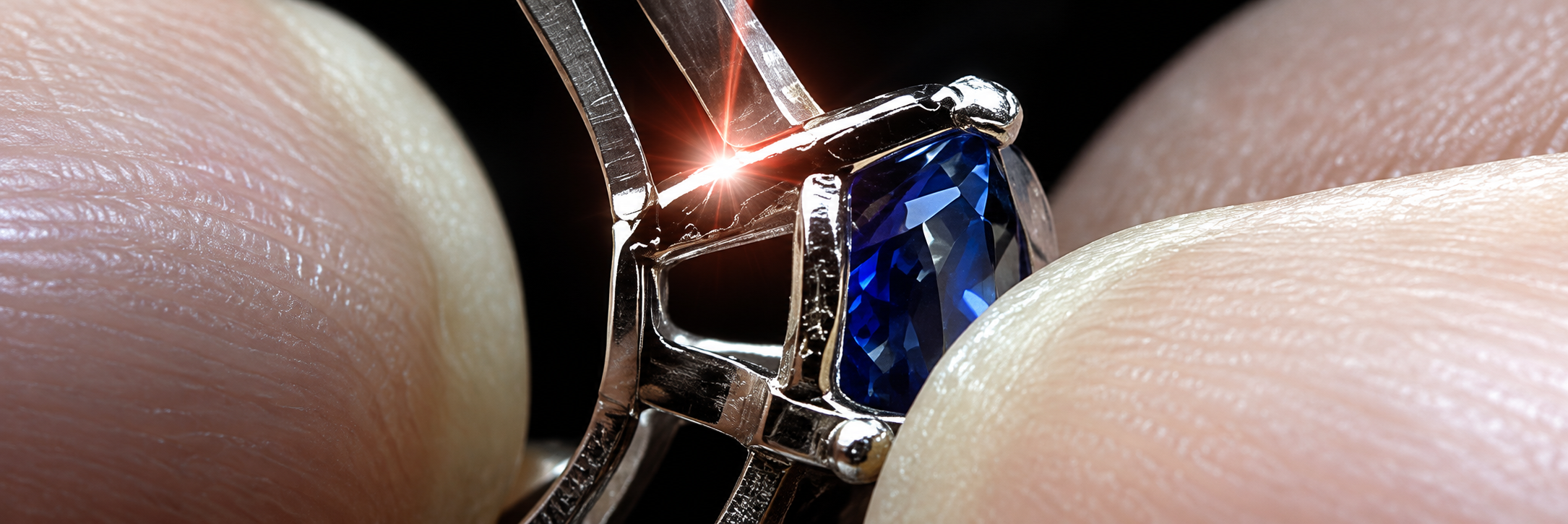
3. Which Wattage Should You Choose for Gold, Silver and Platinum Jewelry?
Metal type matters—but it should not be turned into a simplistic chart saying:
Gold = 60W
Silver = 120W
Platinum = 200W
That would be misleading.
Jewelry alloys vary in composition, thickness and geometry.
Silver also behaves differently from gold because of its optical and thermal properties, while platinum has its own welding characteristics.
So instead of selecting watts from metal name alone, combine metal + repair size + joint geometry + workload.
A practical decision table looks like this:
Your Normal Work | Power Class to Evaluate First |
|---|---|
Fine gold chains and jump rings | 60W |
Small prong repair | 60W–120W |
General gold ring repair | 60W–120W |
Mixed daily gold / silver / platinum repair | 120W |
Regular silver repair | 120W, then confirm by sample |
Medium/heavier ring shanks | 120W–200W |
Large cast jewelry | 200W |
Repeated production work | 200W + check duty cycle |
Mainly delicate stone-set repairs | Do not prioritize watts alone; prioritize low-energy and spot control |
The important phrase here is “evaluate first.”
It is not a universal machine limit.
If You Mainly Repair Gold
For fine gold jewelry and common localized repairs, you may not need high wattage.
A 60W machine can already be a serious repair tool if its pulse control and viewing system are good.
If your shop moves between thin chains, standard rings and heavier repairs, 120W gives you more flexibility.
If You Regularly Repair Silver
Silver is a better reason to pay attention to the machine's pulse capability.
Do not simply ask the supplier:
“Can it weld silver?”
Almost every supplier will answer yes.
Instead ask them to weld your actual sterling-silver sample.
Look at whether the machine can create the required weld consistently without forcing the operator into extreme settings.
If You Regularly Repair Platinum
Again, do not assume platinum automatically means 200W.
Fine platinum prong work and a heavy platinum ring are completely different jobs.
A shop regularly handling larger platinum sections may benefit from additional power headroom, while fine stone-set repair still depends heavily on precision and pulse control.
If You Are Still Unsure Between 60W and 120W
Ask yourself:
Will most of my business remain fine repair, or do I expect mixed everyday repair?
If the answer is fine chains, jump rings and small prongs, compare 60W seriously.
If the answer is rings + chains + silver + platinum + prongs + general repair, 120W is usually the more flexible class to investigate.
If You Are Unsure Between 120W and 200W
Ask a different question:
What regular job can the 200W machine complete that the 120W machine cannot complete efficiently?
If neither you nor the supplier can give a convincing answer based on your real jewelry, there may be no reason to pay for the upgrade.
If heavy castings, thicker sections or production workload repeatedly push the 120W system toward its upper range, 200W becomes easier to justify.
Conclusion: How Many Watts Do You Really Need?
For most buyers, the useful answer is:
60W — choose it for fine jewelry, lighter repair and precision-focused work.
120W — choose it for a general repair shop handling a broad mix of gold, silver and platinum.
200W — choose it when heavier pieces, demanding welds or higher production requirements regularly justify the extra capability.
But do not buy a jewelry laser welder based on wattage alone.
Compare:
Pulse energy + peak power + pulse width + spot size + cooling + viewing system + actual sample weld.
For most full-service repair shops, 120W is the most logical power class to compare first, because it sits between fine-work capability and heavier-work headroom. JewelryLaserNova currently follows the same positioning for its 60W / 120W / 200W QCW series.
The best way to make the final decision is not another specification table.
Send the supplier three or four pieces that represent your real business:
A fine chain.
A normal ring.
A silver repair.
Your thickest regular piece.
Ask them to weld all four.
Then compare the settings, weld appearance, penetration, spatter and repeatability.
That gives you the answer your wattage chart cannot.
If you are comparing a jewelry laser welder, JewelryLaserNova can test your actual gold, silver or platinum samples and help determine whether 60W, 120W or 200W gives you enough working range without paying for power you are unlikely to use.