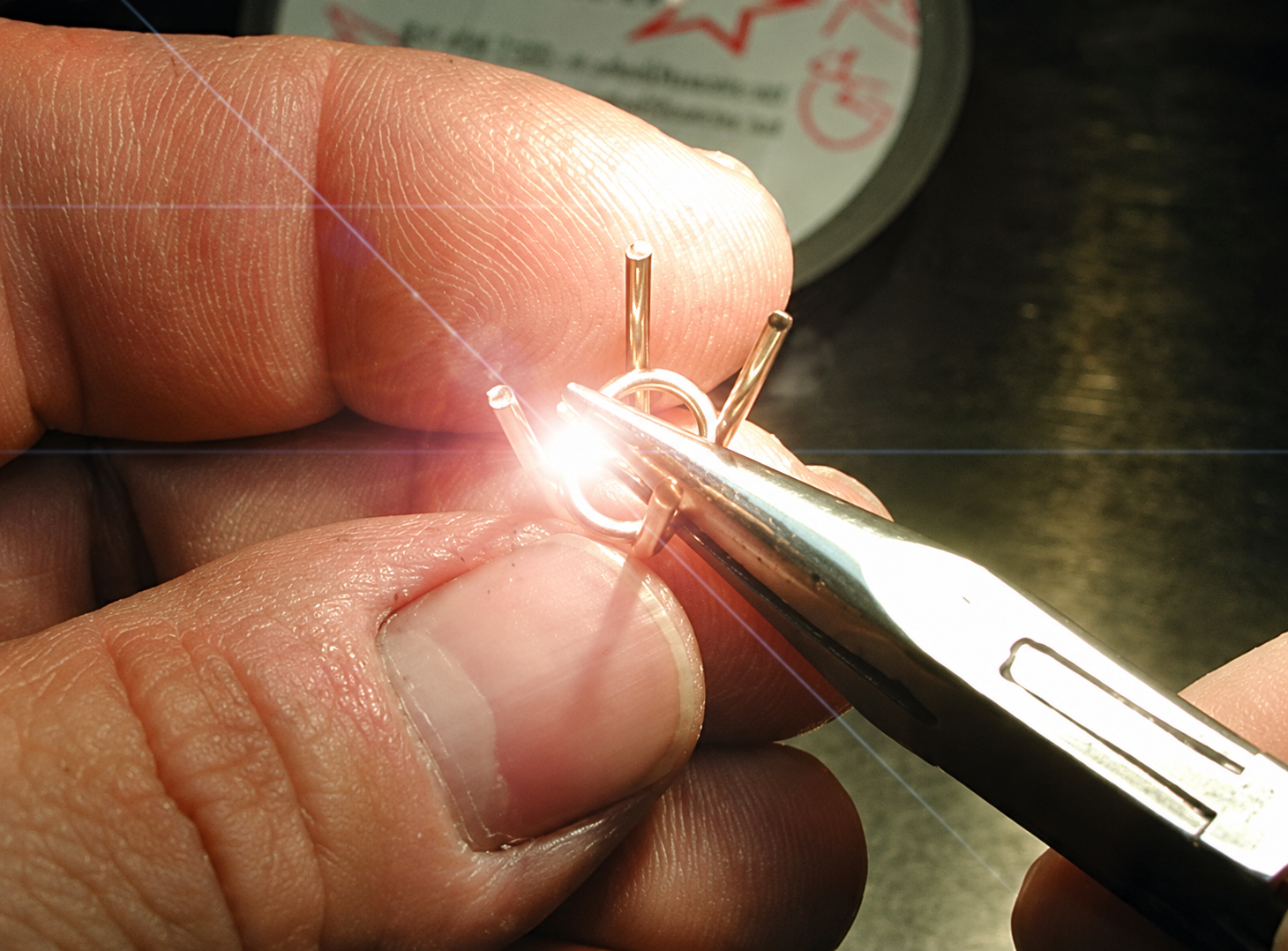
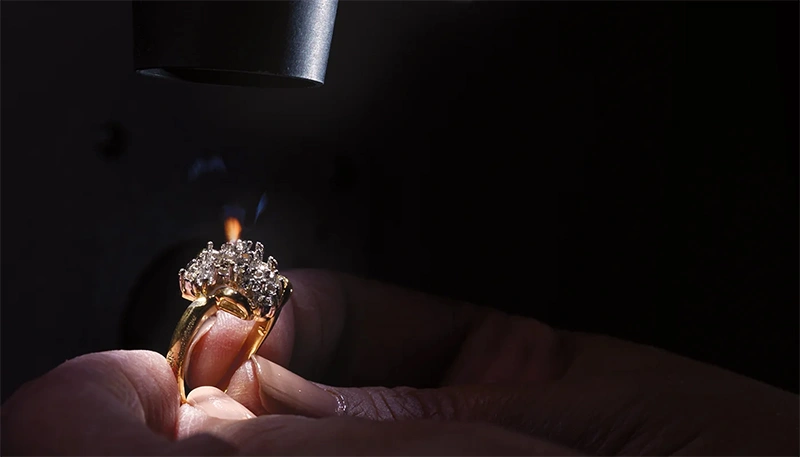
White gold can be laser welded cleanly, but it is less forgiving than simply treating every gold alloy with the same settings.
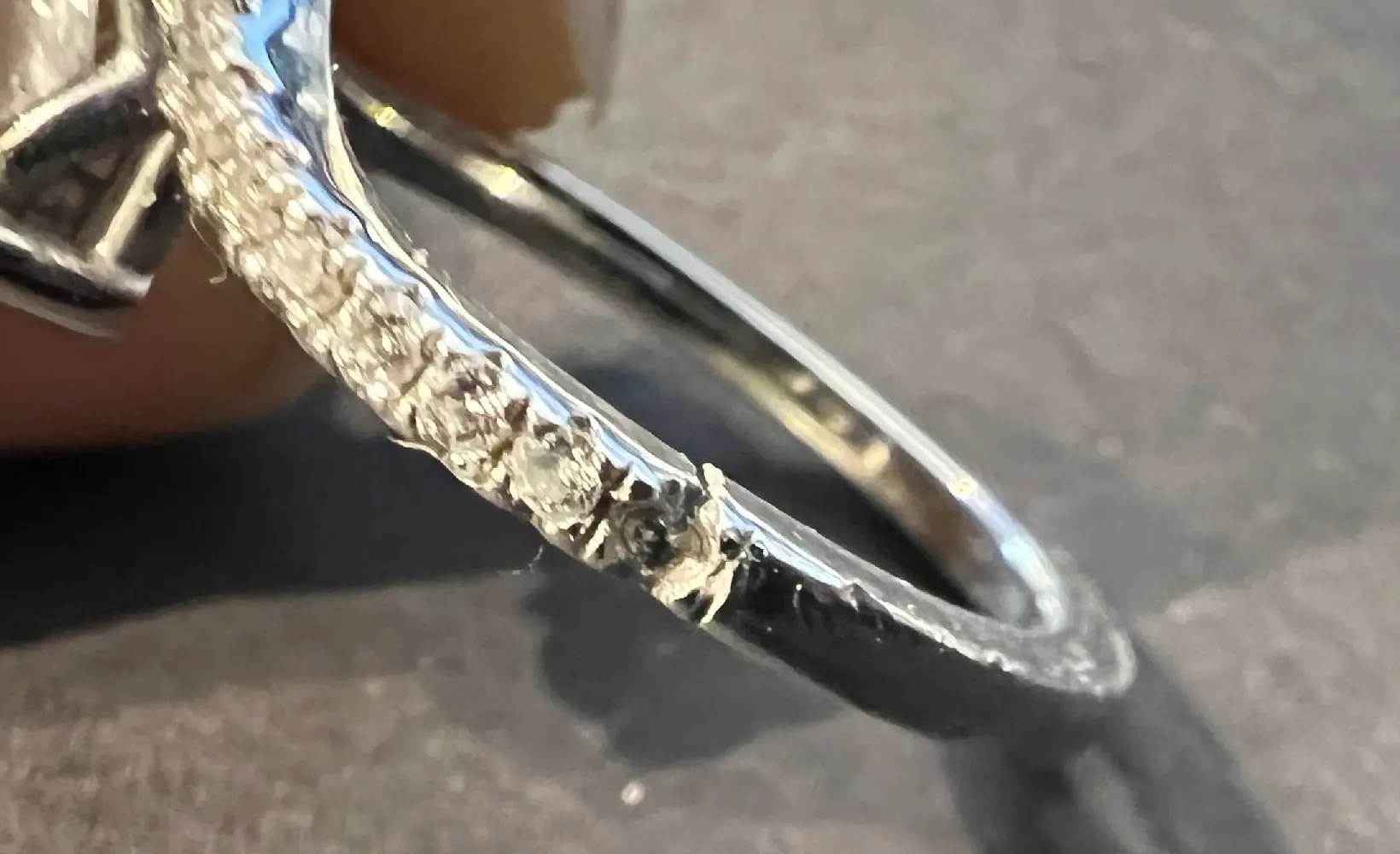
Cracking usually comes from a combination of alloy condition, contamination, joint design, filler choice and excessive localized stress or heat.
Blackening is more often related to surface contamination, oxidation, poor shielding, overheating or the finish around the repair area.
The safest approach is therefore not to keep increasing power until the joint closes.
A better sequence is:
Identify the alloy → Clean and prepare the joint → Start with controlled heat → Build the weld gradually → Inspect before finishing
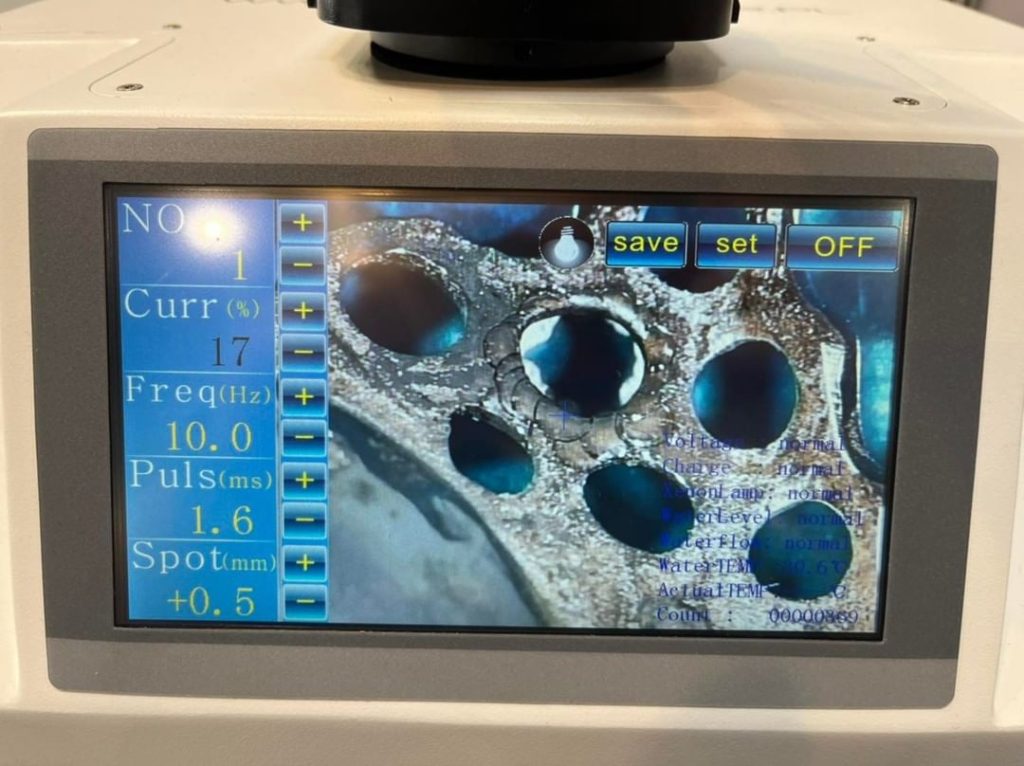
A good jewelry laser welder gives the operator independent control over pulse energy, pulse width, spot size and repetition rate so the weld can be matched to the actual ring, chain or setting rather than forcing one preset onto every white gold repair.
Problem | Common Cause | First Correction |
|---|---|---|
Crack beside weld | Stress, brittle alloy, excessive heat | Inspect alloy and reduce heat buildup |
Crack inside weld | Porosity, contamination, filler mismatch | Remove defect and rebuild cleanly |
Black weld seam | Oxidation or contamination | Improve cleaning and shielding |
Dull repaired area | Rhodium removed during repair | Finish and re-plate if required |
Pits or bubbles | Dirty joint or unstable shielding | Clean, shield and use smaller passes |
1. Why Does White Gold Crack or Turn Black?
Cracking and blackening may appear during the same repair, but they should be diagnosed separately.
Changing laser power before identifying the failure can make the repair worse.
White gold cracking
White gold is not one single alloy.
Two 18K white gold rings can respond differently because one may contain more nickel while another uses palladium or a different alloy system.
Nickel-containing white gold deserves particular care. Previous bending, sizing, soldering, casting porosity and other repairs can leave stress or contamination inside the shank before the laser ever touches it. Ganoksin's technical discussion of nickel white gold makes the same point: the repairer often has little control over how the piece was originally manufactured, repaired or worked before it arrives at the bench.
That is why a crack that appears after one pulse does not automatically mean:
“The laser power was too low.”
Adding more energy can sometimes enlarge the damaged zone instead of fixing it.
Look at where the crack begins.
A crack running away from an old solder joint suggests a different problem from a crater appearing directly in the center of a fresh weld.
Likewise, repeated cracking in exactly the same location may indicate contaminated or structurally compromised metal that should be removed before rebuilding.
White gold blackening
A dark repair area usually points to a different set of causes.
Oil, polishing compound and old solder residue can contaminate the molten pool. Poor argon coverage can allow more oxidation. Excessive heat accumulation can also enlarge discoloration around the weld.
But not every darker area is actually a bad weld.
Many commercial white-gold pieces receive a rhodium finish. Rhodium produces the bright white appearance customers commonly associate with white gold, and Stuller notes that the rhodium finish gradually wears and requires restoration as part of white-gold refinishing.
Laser welding, grinding and polishing can also remove rhodium locally.
The underlying white gold may then look slightly warmer, grayer or less bright than the untouched plated area.
That is a finishing issue, not necessarily weld oxidation.
Nickel and palladium white gold differ
Do not assume that a parameter working beautifully on one white-gold ring will transfer directly to another.
If the alloy is known, record it.
If it is unknown and the repair is high value, treat the first pulses conservatively and inspect the response before continuing.
For shops handling white gold regularly, creating separate working recipes for your most common alloy families is more useful than keeping one universal “white gold setting.”
2. How Should You Prepare White Gold?
Preparation prevents many problems before laser parameters become relevant.
A sophisticated laser welder for jewelry cannot compensate for a dirty joint, hidden solder contamination or a large unsupported gap.
Clean the weld area first
Remove polishing compound, oil, dirt and surface residue from the repair area.
Ultrasonic cleaning, steam cleaning or the appropriate jewelry-cleaning procedure can be used depending on the piece and stones present.
Then inspect the joint under magnification.
Do not weld through visible debris and hope the laser burns it away.
Contamination can become trapped inside the molten pool and appear later as porosity, pits or discoloration.
Inspect previous repairs
Old jewelry is particularly important here.
A sizing seam may contain solder.
A cracked shank may already contain porosity.
A prong may have been retipped several times.
If questionable material surrounds the repair, remove the compromised zone until you reach sound metal before rebuilding.
Trying to weld over a failing previous repair often produces another failing repair.
Prepare rhodium-plated areas
If the piece has a rhodium finish, clean and prepare the actual weld zone so the laser is working with the underlying alloy rather than treating the surface coating as if it were the base metal.
After welding, finishing and polishing, the repaired area can be re-plated when the original piece requires a consistent bright-white rhodium finish.
Control the joint gap
Good fit-up reduces the amount of energy and filler needed to bridge the repair.
For a ring-sizing seam or crack repair, align the two sides accurately and secure them before welding.
Large gaps encourage operators to compensate with excessive energy.
That generally creates more heat and more finishing work.
Match the filler
When filler is required, use wire that is appropriate for the base jewelry alloy and repair.
Matching karat, color and alloy behavior helps the completed joint blend during polishing and reduces the chance of creating a visibly different seam.
Unknown solder, unknown filler and unknown white gold together create unnecessary variables.
3. How Should You Set the Laser Welder?
There is no responsible universal setting such as:
“18K white gold = 15 J, 2 ms, 3 Hz.”
Different jewelry laser welding machines use different laser sources, control scales, peak powers and beam characteristics.
Instead, adjust the machine according to what each parameter actually changes.
Start With Controlled Energy
Begin on the low side of a proven range for your machine and alloy.
Increase energy only until you achieve clean fusion.
If the metal is violently ejecting, forming deep craters or producing excessive discoloration, increasing energy further is usually the wrong direction.
The weld pool should be controllable.
Keep Pulse Width Under Control
Longer pulses generally introduce more heat into the surrounding area.
That can be useful when deeper fusion is required, but it also increases heat accumulation.
For fine shanks, chain links, prongs and small white-gold repairs, begin with a relatively short controlled pulse and increase only when penetration requires it.
The objective is:
Enough fusion without unnecessarily heating the surrounding jewelry.
Match Spot Size to the Repair
A very small spot concentrates energy.
That can be useful for tiny localized work, but it also makes power density more aggressive.
A somewhat larger spot spreads the same energy over more area and can be useful for smoothing or blending.
Use a smaller controlled spot for localized welding and adjust wider when the repair requires broader blending.
Do not automatically use the smallest spot because it sounds more precise.
Control Frequency and Heat Buildup
Frequency determines how quickly another pulse follows.
If you keep firing pulses rapidly into the same small zone, the metal may not have time to lose heat between pulses.
The result can be cumulative heating even when each individual pulse looks reasonable.
For crack-sensitive white gold, control the pace of welding rather than trying to finish the joint as quickly as possible.
Use Stable Shielding
Argon shielding can help reduce oxidation and improve the weld environment, particularly for white gold and other reactive or oxidation-sensitive jewelry repairs.
Use the flow and nozzle arrangement recommended for your machine rather than copying a universal L/min value from another welder.
The important requirement is stable shielding over the actual weld pool.
JewelryLaserNova's current jewelry-focused systems provide adjustable pulse parameters for white gold and related precious-metal work, and applicable configurations include an argon shielding connection for white-gold repair.
A useful parameter-development order is:
Pulse width → Spot size → Energy → Frequency → Fine adjustment
Change one major variable at a time.
Otherwise, when the weld improves or fails, you will not know why.
4. How Do You Weld White Gold Cleanly?
Once preparation and starting parameters are correct, welding technique determines whether the repair stays controlled.
Test before touching the customer piece
For an unfamiliar alloy or a new machine, start with a representative scrap sample whenever possible.
Use the same or similar:
Karat.
Alloy family.
Section thickness.
Filler.
Surface condition.
You are not looking for a magic number.
You are looking for the smallest stable process window that produces clean fusion without cracks, pits or excessive discoloration.
JewelryLaserNova similarly recommends application-matched sample testing because welding results depend on the metal, workflow and machine setup rather than one universal parameter set.
Tack before completing the seam
For a ring shank or larger repair, make a few controlled tack welds first.
This confirms alignment and prevents the joint from moving while you build the remainder of the weld.
Inspect those first spots.
If they immediately produce cracks, pits or severe blackening, stop there.
It is much easier to investigate three bad spots than an entire bad seam.
Build the weld gradually
Do not try to close a deep groove with one aggressive pulse.
Build the joint with small controlled weld spots and filler where required.
Use consistent overlap so the individual spots become one continuous weld rather than isolated craters.
The objective is controlled fusion with the minimum heat necessary for the repair.
This is one of the major reasons a laser welder for jewelry repair is useful on rings, prongs and stone-set work: the heat can be localized much more tightly than with broad torch heating.
That reduced heat spread can make work near settings more practical, but it does not make every gemstone automatically safe. JewelryLaserNova likewise describes laser welding as reducing heat risk near stones rather than eliminating it and recommends sample testing for heat-sensitive stones.
Remove or protect sensitive stones whenever the specific repair demands it.
Inspect before adding more heat
After the first welding sequence, stop and inspect under magnification.
Look for fusion at the root, porosity, edge cracking, pits and excessive discoloration.
If the weld looks incomplete, determine whether it needs more penetration, better filler placement or better preparation.
Do not automatically raise every setting.
If the Weld Starts Cracking
Stop adding energy.
Inspect whether the crack is:
Inside the new weld.
Beside the heat-affected area.
Following an old solder seam.
Branching through the original metal.
If contaminated or cracked metal is already present, remove the defective region before rewelding.
Repeatedly melting the same damaged area rarely improves the metallurgy.
If the Weld Turns Black
First clean and inspect it.
If the blackening wipes or polishes away, surface contamination or oxidation may be the main problem.
If pits accompany the discoloration, review cleaning and shielding.
If the repaired area simply looks less bright after polishing, check whether the rhodium finish has been removed.
That last problem is solved during finishing—not by welding the area again.
Finish the Repair Correctly
Once the joint is sound, smooth and polish it without removing unnecessary base material.
If the original white-gold piece was rhodium plated, restore the finish after the structural repair is complete.
A brilliant plating job cannot hide a cracked or porous weld.
The structural repair always comes first.
Conclusion
How do you laser weld white gold without cracking or blackening?
Do not begin with a universal parameter chart.
Begin with the metal.
Cracking is most often controlled by understanding the alloy condition, removing damaged or contaminated material, improving joint fit, matching filler and avoiding unnecessary heat accumulation.
Blackening is controlled by clean preparation, stable shielding, appropriate heat input and correctly distinguishing weld oxidation from a rhodium-finishing issue.
The most reliable workflow is:
Inspect → Clean → Identify → Test → Tack → Build → Inspect → Finish
A professional jewelry welder should give you enough control over pulse width, energy, spot size and frequency to develop a repeatable process for the white-gold repairs that actually come across your bench.
Do not judge the machine from a supplier welding one prepared yellow-gold sample.
If white gold is an important part of your repair business, send the supplier an actual 14K or 18K white-gold repair scenario.
JewelryLaserNova can provide application-matched guidance and real sample welding videos for gold, white gold, silver and platinum repairs before you choose a machine. Its current product line is specifically positioned around jewelry repair rather than general industrial welding.